Intelligence Inside the Facility: Increasing Safety Without Increasing Staffing
Your staff are managing more incidents, more oversight pressure, and more documentation requirements with fewer people than the mission demands. This is session two of a three-part series and a direct conversation with corrections leaders who have run facilities at scale about what connected, real-time intelligence actually looks like on the floor.
What You Will Learn:
- What it costs when incident documentation lags behind the incident and what a defensible record looks like when it ends up under scrutiny
- Why having more cameras and more systems does not mean better visibility, and what the burden of fragmented monitoring does to your staff every shift
- How AI detection surfaces what matters so officers can act, without replacing the judgment that only they can provide
- What the transition to unified facility intelligence looks like in practice, including where it is harder than vendors usually admit
- Why the documentation record that starts at booking does not stay at intake and how gaps at intake show up during incidents on the floor
Who You Will Hear From:
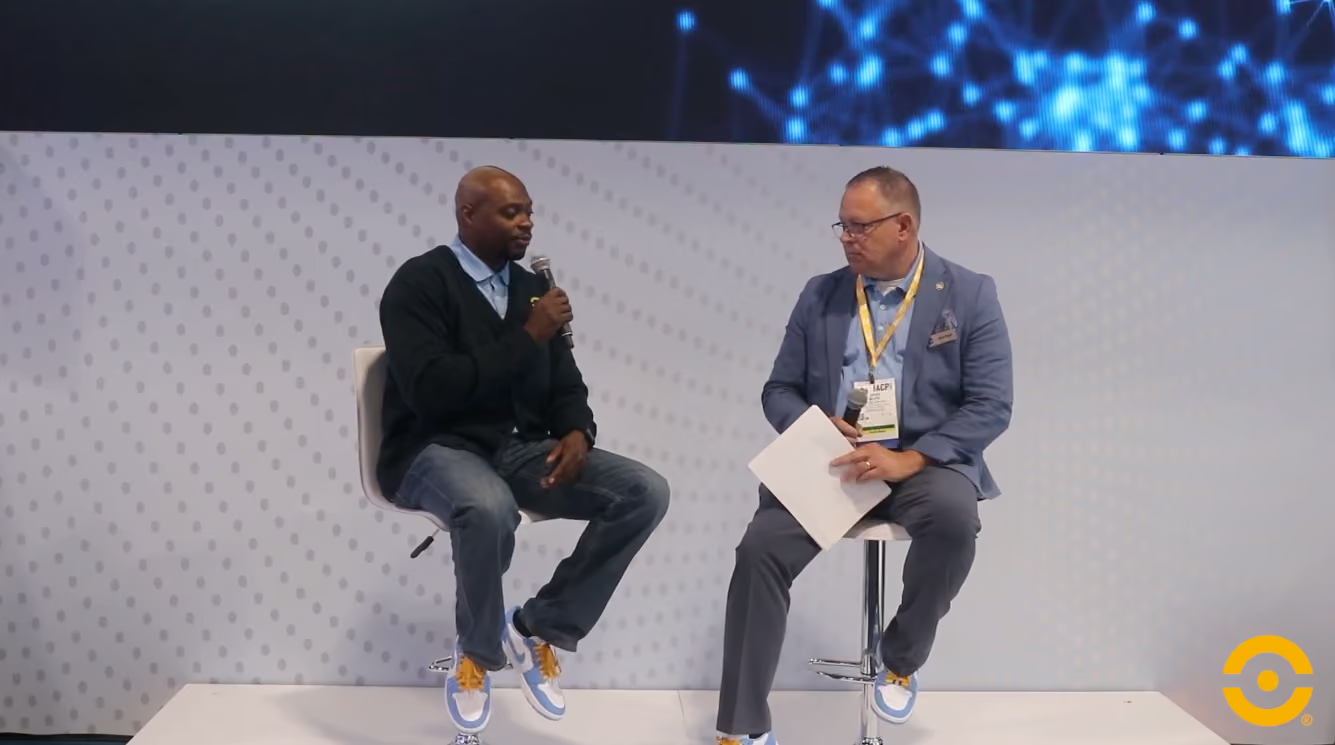
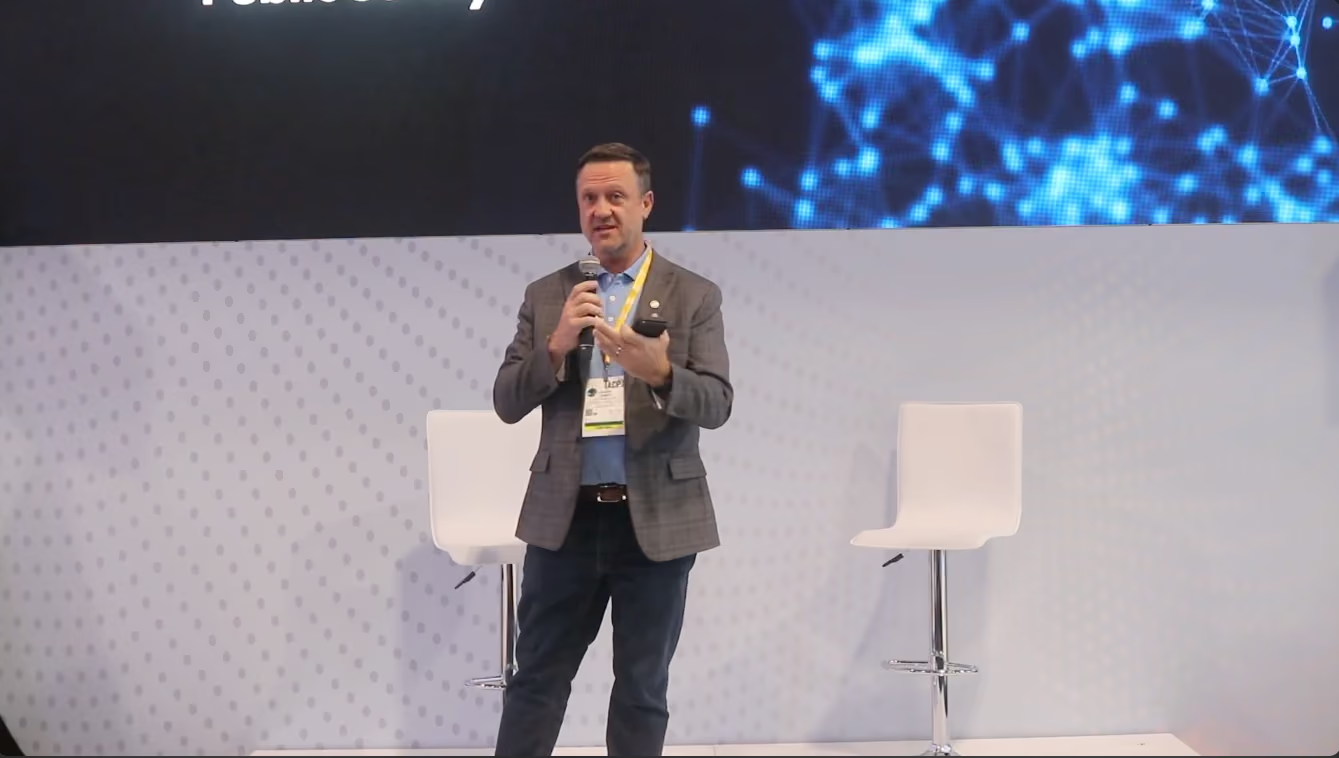
Sheriff (Ret.) John Boyd spent 34 years in law enforcement including two terms as Sheriff. He now works with corrections agencies across the country and brings the perspective of a leader who has sat in the chair this audience is sitting in.
Josh Tewalt served as Director of the Idaho Department of Correction, overseeing nine prisons, four re-entry centers, and 25,000 offenders under supervision.
Cameron Bridges, Senior Sales Engineer at Coreforce, will walk through what the technology looks like operationally before and after integration.
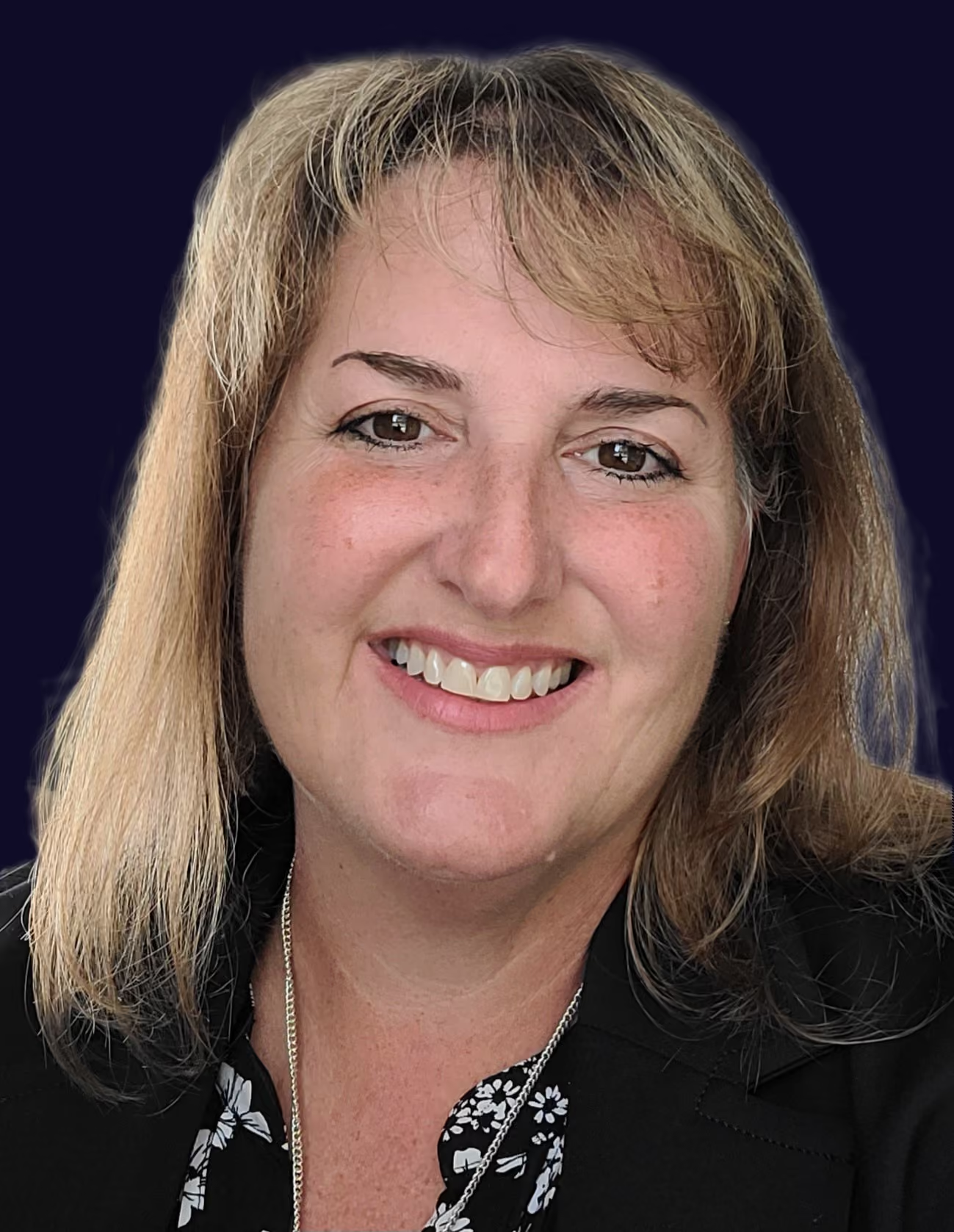
Moderated by Susan Smith, Coreforce.
Your staff are stretched and incidents outpace documentation every shift. When oversight asks for the full record, will yours be ready?
Insights for safer, smarter operations.


.avif)



256px.webp)

Webinar registration
Webinar



About this session:
Your staff are managing more incidents, more oversight pressure, and more documentation requirements with fewer people than the mission demands. This is session two of a three-part series and a direct conversation with corrections leaders who have run facilities at scale about what connected, real-time intelligence actually looks like on the floor.
What You Will Learn:
- What it costs when incident documentation lags behind the incident and what a defensible record looks like when it ends up under scrutiny
- Why having more cameras and more systems does not mean better visibility, and what the burden of fragmented monitoring does to your staff every shift
- How AI detection surfaces what matters so officers can act, without replacing the judgment that only they can provide
- What the transition to unified facility intelligence looks like in practice, including where it is harder than vendors usually admit
- Why the documentation record that starts at booking does not stay at intake and how gaps at intake show up during incidents on the floor
Who You Will Hear From:
- Sheriff (Ret.) John Boyd spent 34 years in law enforcement including two terms as Sheriff. He now works with corrections agencies across the country and brings the perspective of a leader who has sat in the chair this audience is sitting in.
- Josh Tewalt served as Director of the Idaho Department of Correction, overseeing nine prisons, four re-entry centers, and 25,000 offenders under supervision.
- Cameron Bridges, Senior Sales Engineer at Coreforce, will walk through what the technology looks like operationally before and after integration.
- Moderated by Susan Smith, Coreforce.