256px.webp)
FOIA Requests Are Coming Whether You're Ready or Not. Here's How to Prepare.
Federal FOIA law gives agencies 20 business days to respond to a public records request, and most states impose their own, often shorter, deadlines for law enforcement footage specifically, real ranges run from as little as 3 business days in Arkansas up to 45 days for certain critical-incident footage under California law. [1] Miss that window and you have an automatic violation, regardless of whether your department has the staff or tools to comply in time.
For a small agency that has just deployed cameras, sit with that scenario for a moment. Not an organized pressure campaign. Not a high-profile incident. A routine arrest. A routine public records request. A department that did not have the redaction capability to respond in time. That is how FOIA becomes a legal exposure and a local news story.
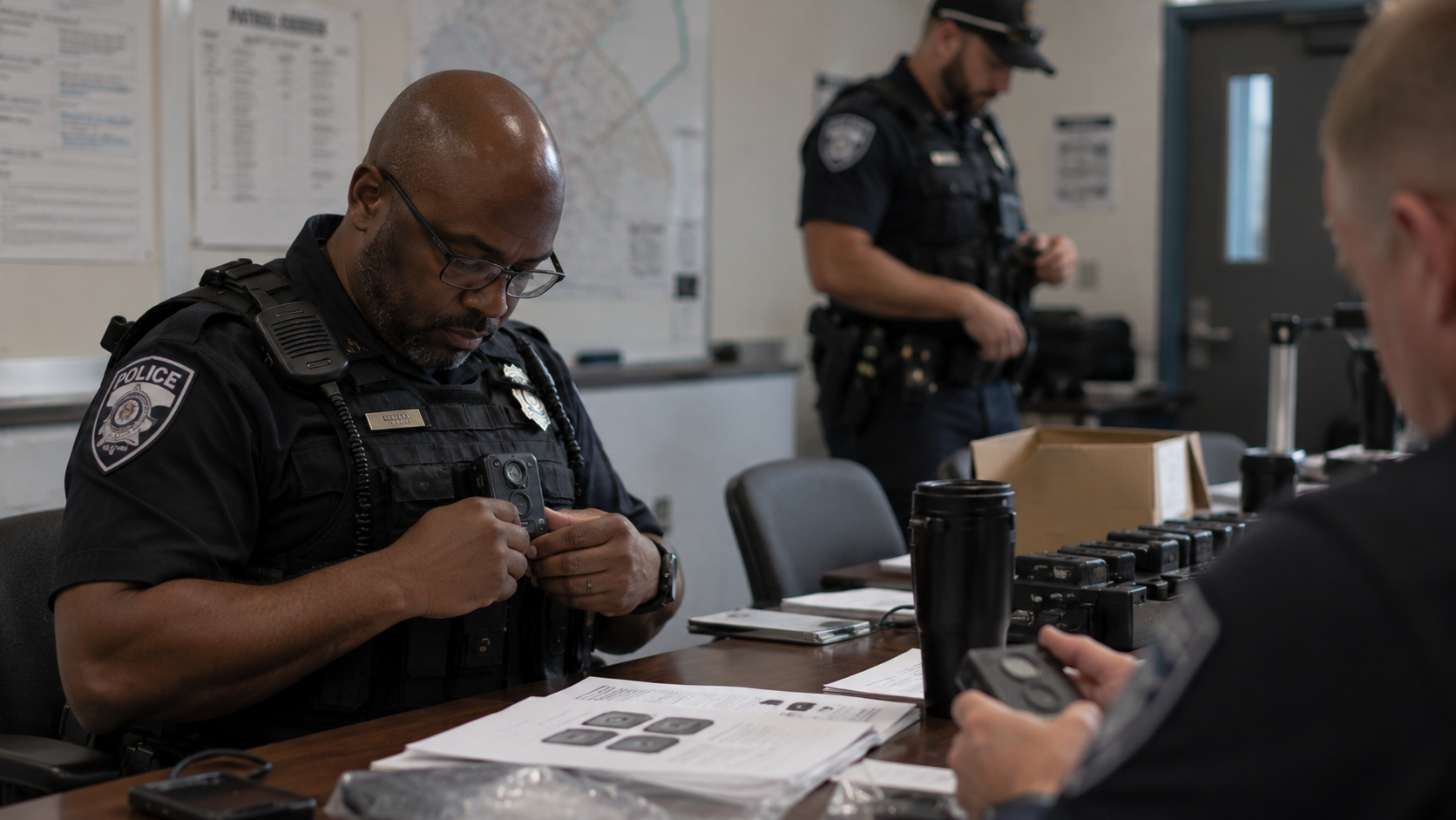
The agencies that handle FOIA well after going live share one thing: they built the process before the cameras before the cameras were implemented.
Chief Lesley Wiete learned this firsthand. One month after Purdue University Police went live on cameras, a high-profile incident brought national attention and a surge of FOIA requests her department was not ready for.
“We didn't probably have the best process in place or weren't exactly prepared a month or two months out to handle the FOIA requests, the redaction, just the time, the hours spent dealing with that process. It was very time consuming. I do recommend trying to think about it ahead of time, just because you never know when something is going to happen.”
— Chief Lesley Wiete, Purdue University Police Department
What the Numbers Actually Look Like
Before describing the process, the math is worth understanding. Most chiefs evaluating cameras significantly underestimate the FOIA exposure that comes with deployment.
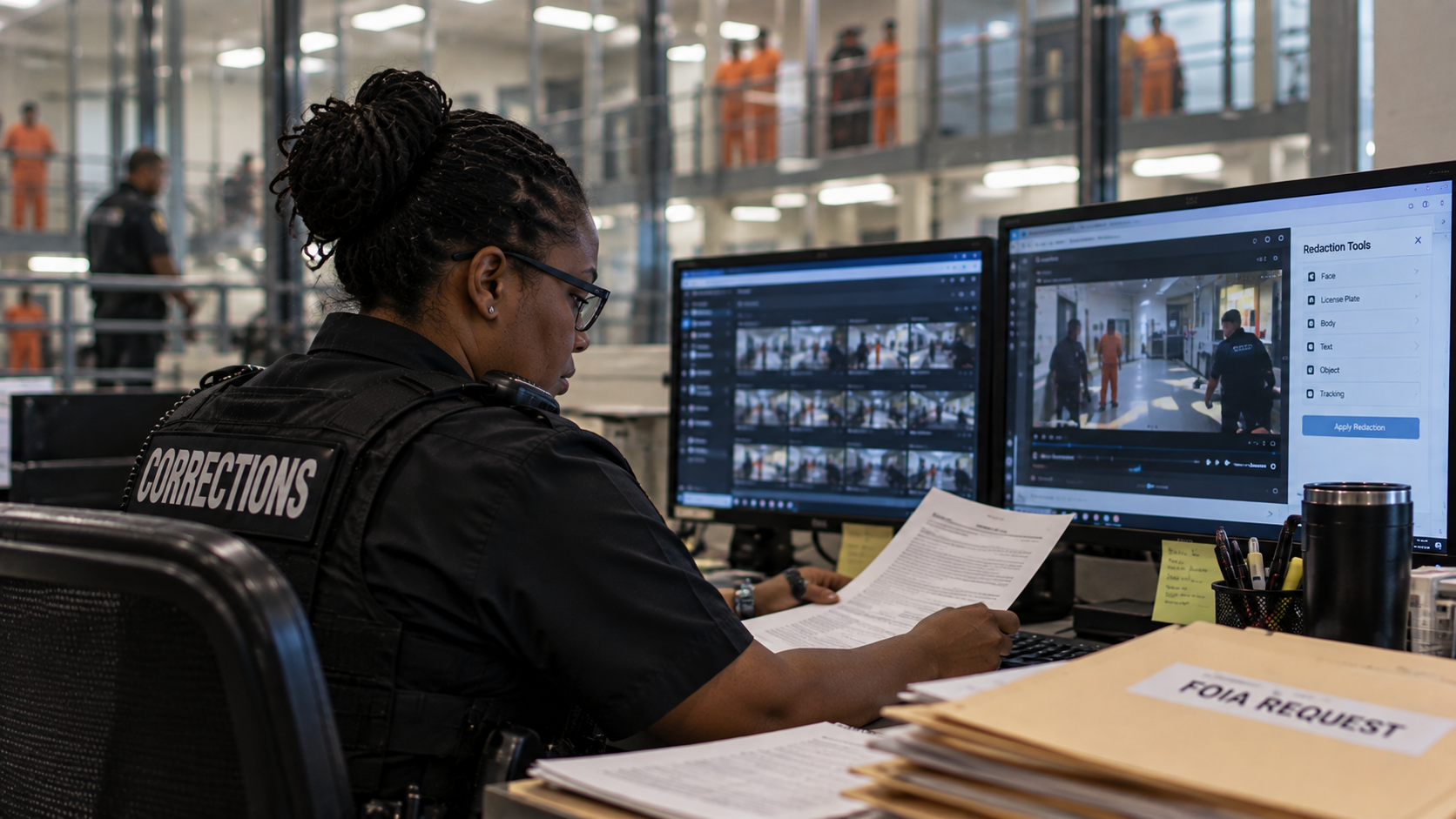
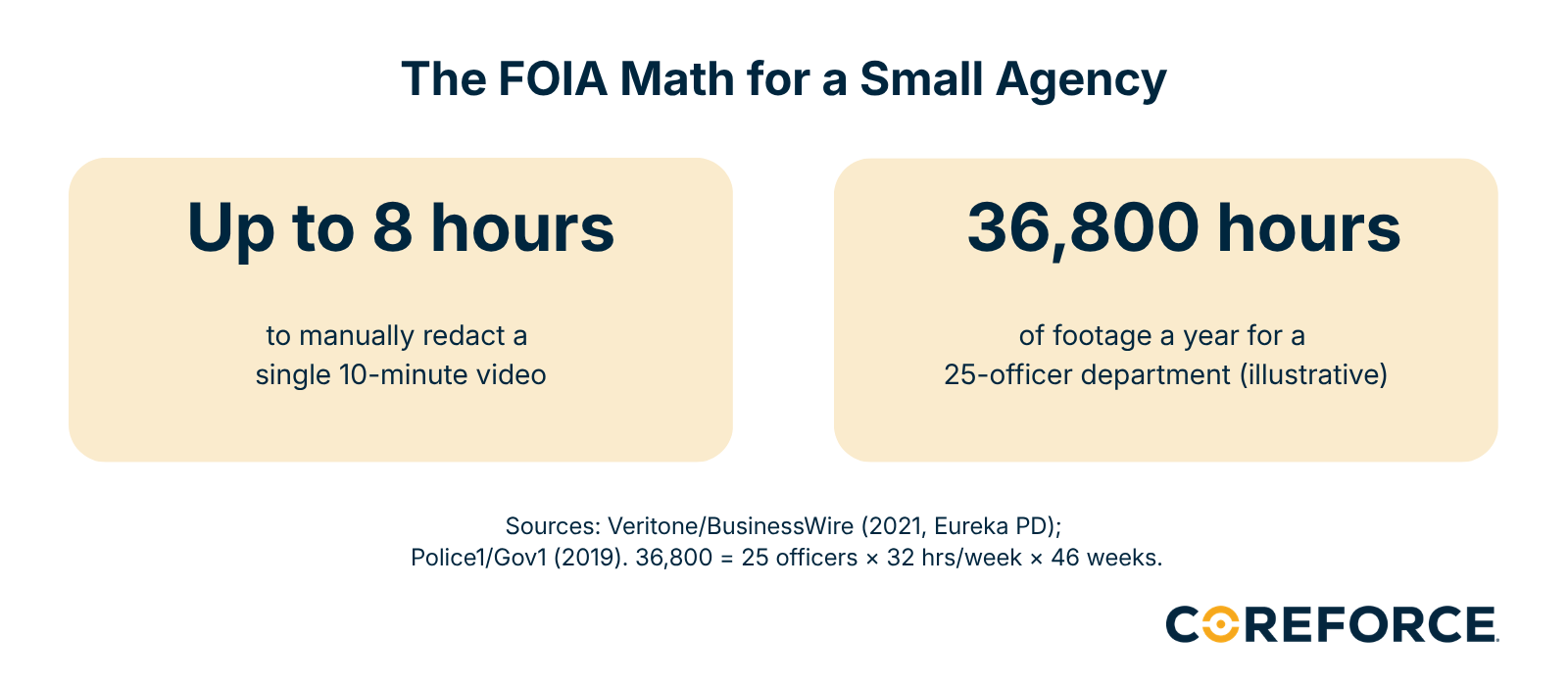
• Manual redaction of a single 10-minute video using traditional video editing software can take up to 8 labor-intensive hours. That is not a rounded industry estimate, it is what Eureka Police Department's own records manager reported after her department's first public records request following its body camera rollout: it took their digital evidence technician eight hours to manually redact a single 10-minute clip. [2] A complex FOIA request involving 45 minutes of footage from a significant incident can consume a comparable multiple of that time for a single records clerk.
• A 25-officer department running cameras on regular patrol generates an estimated 36,800 hours of footage per year potentially subject to public records requests, based on cameras running 32 of every 40 on-shift hours, 46 weeks a year. [3] That is the volume context for every request that comes in.
• State FOIA response windows for law enforcement footage vary significantly by jurisdiction, from as few as 3 business days in Arkansas to 45 days for certain critical-incident footage under California law, with the federal standard at 20 business days. [1] Miss the window that applies to your state and you have an automatic violation. The deadline applies the same to a 25-officer agency as to a 2,500-officer one.
A single missed or mishandled FOIA response is rarely just a legal cost. It is often a front-page story in the community where you need public trust to do your job.
Three Things to Have in Place Before Cameras Go Live
Every agency that handles FOIA without crisis had these three things in place before the first camera left the building.
One: a written policy that defines what is releasable, what is exempt, and what requires redaction. This is not something you figure out when the first request comes in. Every state has different exemptions covering witnesses, victims, juveniles, medical information, and ongoing investigations. Your records clerk cannot make those judgment calls in real time without written guidance. The policy also needs to define the approval chain: who authorizes release of footage from a serious incident, and when does your municipal attorney need to be consulted? For a 40-officer department without legal counsel on staff, Lexipol, Coreforce's policy partner, writes these policies grounded in your state's specific requirements and are defensible in court. That is the document that determines whether your first FOIA response is handled correctly or becomes an exposure.
Two: a designated owner with a trained backup. FOIA management cannot fall to whoever is available when a request comes in. In a small department, this is typically your records clerk or a designated supervisor. Chief Swistek assigns specific ownership of every technology responsibility to a specific person.
“We have a sergeant that is in charge of the body camera system. I split up a lot of these responsibilities so I have the buy-in from our staff. This way it doesn't fall back on me, because as chiefs and sheriffs, we're running in different directions every given week. And I've had great success with it.”
— Chief Mark Swistek, Long Beach (IN) Police Department
Your state FOIA deadline does not know your records clerk is on vacation. Your backup does. Cross-train someone now, before the first time-sensitive request arrives.
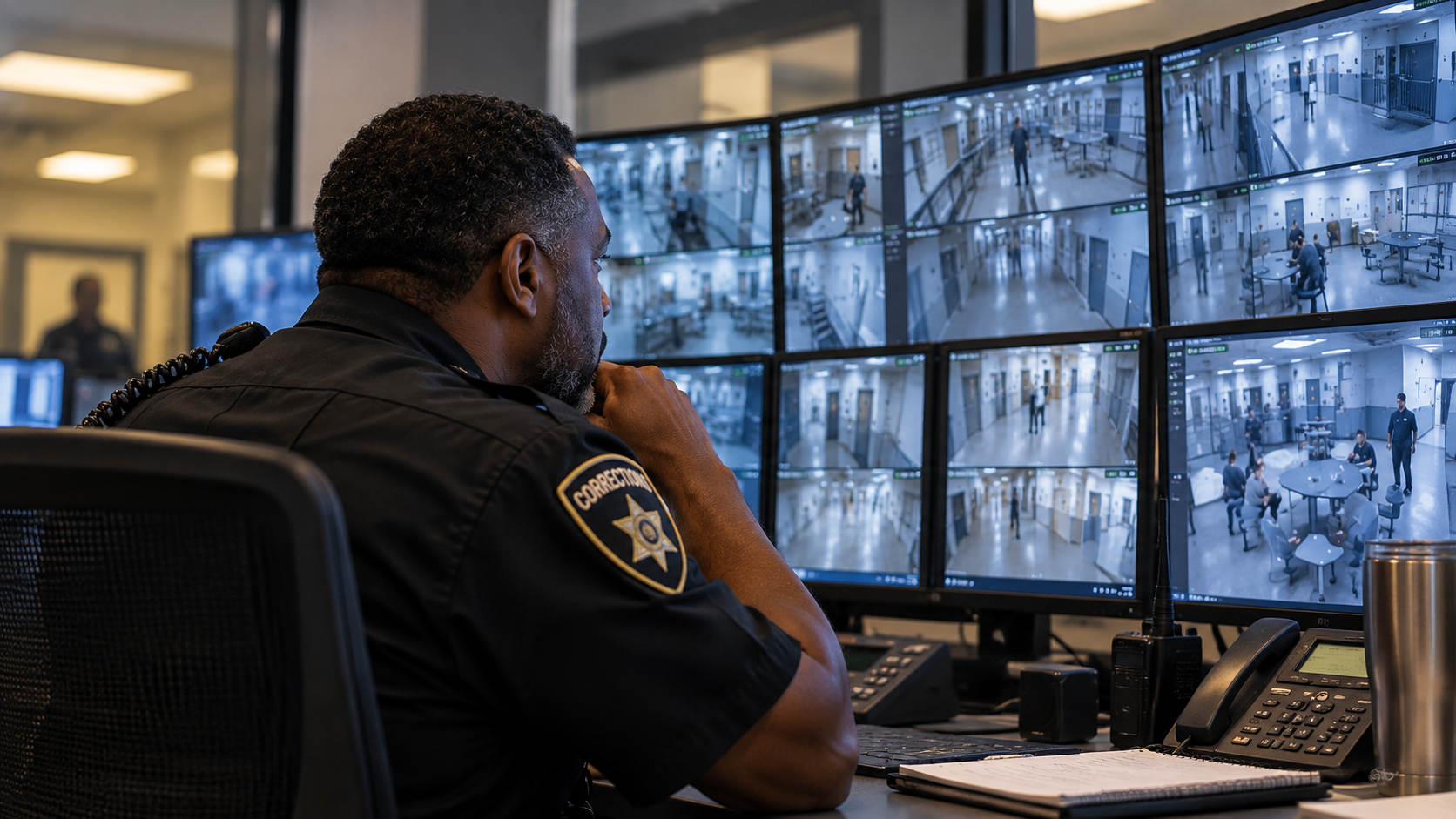
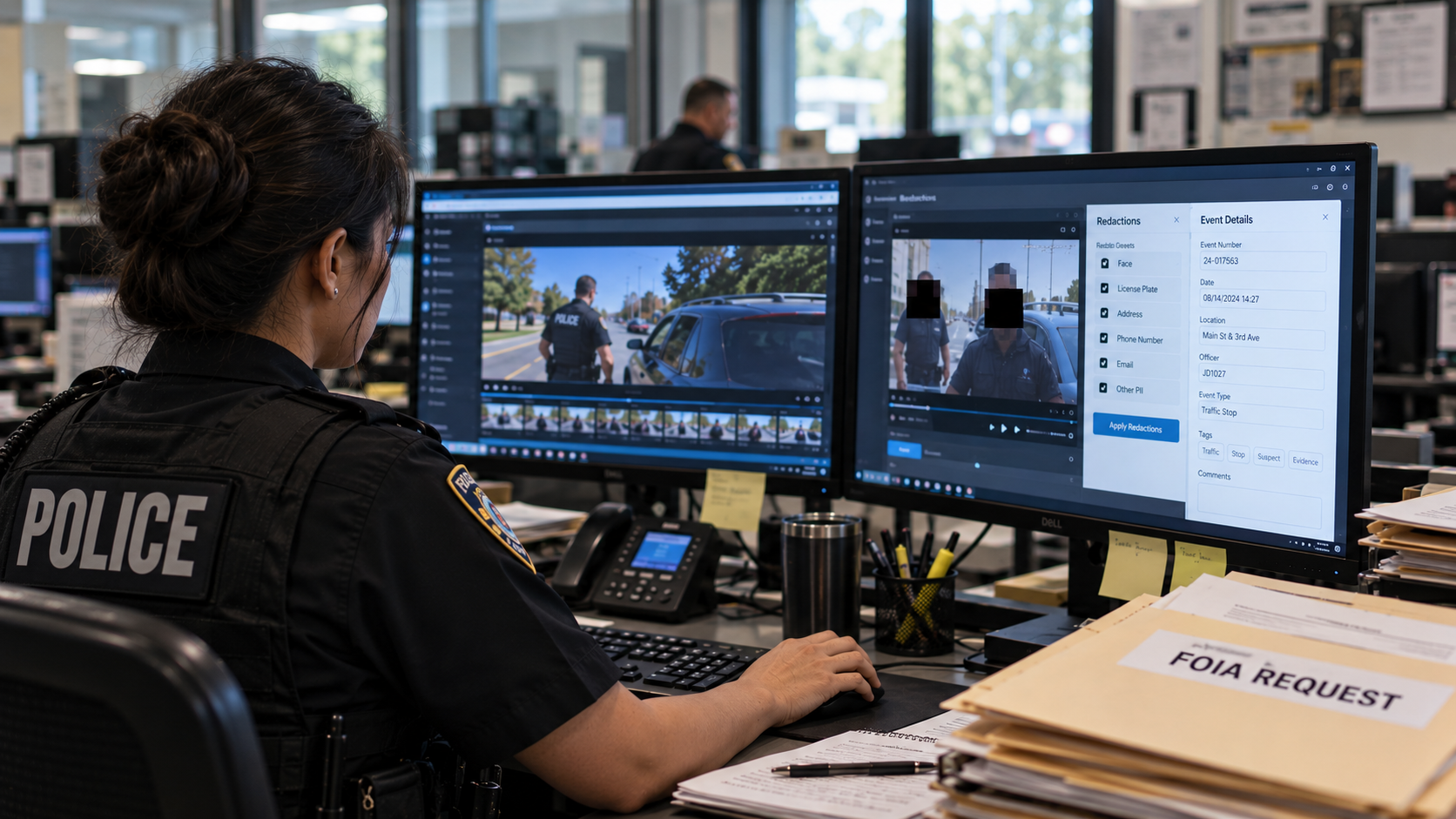
Three: a redaction capability that matches your volume. For most small agencies, this means AI-assisted redaction built into your DEMS, not manual frame-by-frame work in video editing software. When a face moves across 45 minutes of footage, manually tracking and blurring it is hours of work. AI-assisted redaction detects and tracks faces, license plates, and identifying information automatically, with human review before release. Purpose-built DEMS redaction tools are built specifically to reduce that manual burden as a standard feature.
When the Surge Arrives
Even with a strong process, a high-profile incident can generate a volume of requests that exceeds normal capacity. Chief Wiete's department had to call on a neighboring agency using the same DEMS platform for assistance when this happened.
The agencies that handle surges without crisis have two things working in their favor. Their footage is already tagged, classified, and searchable in a DEMS, so pulling the relevant files takes minutes, not hours of digging through an unorganized archive. And their DEMS supports credentialed access sharing, so a neighboring agency or contracted redaction service can be granted specific, audited access to assist without shipping DVDs or breaking chain of custody.
The worst position when a surge arrives: manually searching an untagged archive across multiple storage locations, hoping the footage you need is not on a physical drive in a closet somewhere. The best position: a keyword search that surfaces the relevant officer's footage, the date-stamped evidence file, the classification record, and the sharing log in one result.
One Practical Move You Can Make This Week
Chief Swistek resolved the routine FOIA volume problem with a straightforward approach: his department charges $150 for public records requests involving body camera footage. The fee is approved by the Indiana state board of accounts and compliant with state law.
“If it was just the simple $20, I think you're going to be getting those requests every single day and you're going to tie down an employee. We learned early on that we had to make that $150, and the requests are few and far between.”
— Chief Mark Swistek, Long Beach (IN) Police Department
Before your cameras go live, find out what your state allows for body camera FOIA fees and talk to your municipal attorney. A reasonable, legally-approved fee structure is not a barrier to transparency. It is a workload management tool that every small agency running cameras should have in place before day one.
FOIA is not the enemy of body camera programs. Unpreparedness is. The chiefs who build the process before cameras go live find that FOIA becomes a routine, manageable part of running an accountable department. The chiefs who discover the process after the cameras are on the street find it a recurring crisis that nobody has time to manage.
Sources
[1] State-by-state FOIA/public-records deadline comparisons (Arkansas: 3 business days; federal FOIA: 20 business days; California critical-incident footage: 45 days under 2018 legislation) https://jatheon.com/blog/foia-deadlines-state/
[2] Veritone / BusinessWire — “Veritone to Provide Six Months of Video Redaction Software to Law Enforcement Agencies...” quoting Amanda O'Neill, Records Manager, Eureka Police Department https://www.businesswire.com/news/home/20210719005209/en
[3] Val Van Brocklin, Police1/Gov1 — “Body Cameras: Public Records and FOIA Requests,” December 2019 (illustrative footage-volume calculation: 25 officers, 32 of 40 hours per week, 46 weeks per year) https://www.gov1.com/legal/articles/body-cameras-public-records-and-foia-requests-kfEBfOyHJOJk7ZG6/
[4] Body Camera Technology for Any Size Agency: Without Adding Staff or Regret
Webinar Transcript — Chief Mark Swistek, Chief Lesley Wiete, 2026 https://www.coreforcetech.com/resources/body-camera-technology-for-any-size-agency-without-adding-staff-or-regret
Be Ready Before the Request Arrives
See how Coreforce digital evidence management puts AI-assisted redaction, audited sharing, and chain of custody in one system, for agencies of any size.
A routine records request can become a legal problem if you can't redact in time. Three things to have ready before cameras go live.