256px.webp)
Strong Responses Matters. Prevention Matters More.
Every corrections facility has practiced response. Officers know what to do when an incident is called. Supervisors know how to direct resources. The control room knows how to communicate. When something happens, your facility handles it.
What facilities with the best safety outcomes have in common is the ability to see a situation developing before it requires response. Not a prediction. Not a guess. A real-time view of what is happening right now processed by a system that can recognize behavioral and environmental signals that precede incidents and surface that information to the right person in time to intervene.
The difference between a facility that responds well and one that prevents effectively is not staffing. It is infrastructure.
The Cost of Being Reactive
Reactive corrections management is not a failure. It is what facilities do when the infrastructure for something better does not yet exist. When monitoring systems are fragmented and staffing is compressed, incidents get managed when they are reported and responded to when they are called in. That is the baseline, and most facilities run it reasonably well.
The problem is what that baseline costs, in every currency that matters to a corrections leader. The staffing and monitoring pressures behind this are documented at scale. Lockdowns across Illinois Department of Corrections facilities nearly tripled in five years, from 635 in FY2019 to 1,814 in FY2024. this increase is attributed to chronic understaffing and overcrowding. [1] Staff assaults in New York reached 2,070 in 2024, the highest in years, driven by a documented 37% decline in corrections officer staffing since 1999 alongside mandatory overtime and facility closures. [2] Both are real, serious signals of a system under strain. Both point back to the same root pressure discussed throughout this series, facilities trying to do more with fewer people and more fragmented tools.
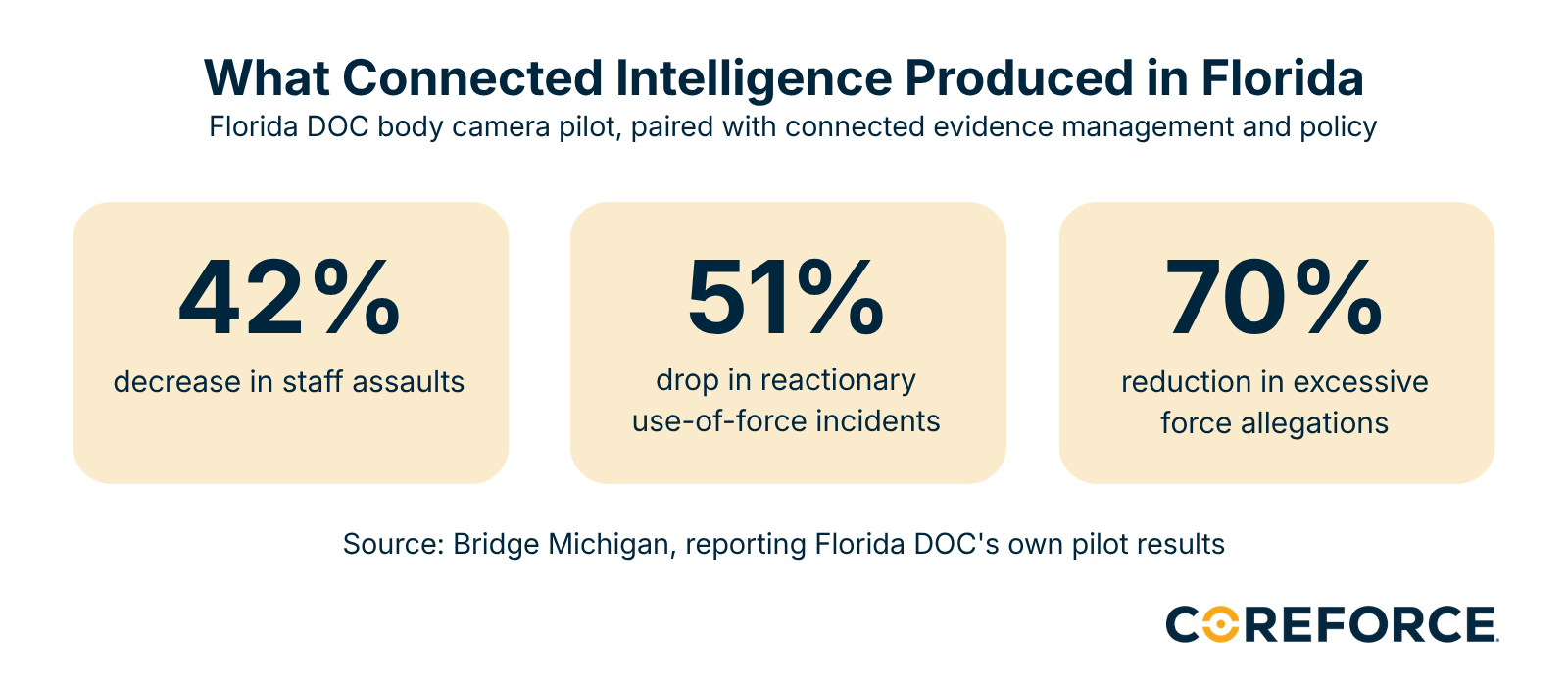
Against that backdrop, one result stands out because it was measured directly rather than inferred. The Florida Department of Corrections' body camera pilot, which paired cameras with connected evidence management and policy, produced a 42% decrease in staff assaults and a 51% drop in reactionary use-of-force incidents. [3] Those outcomes did not come from better documentation of incidents after they happened. Cameras alone document what occurred. The reduction came from pairing the cameras with the infrastructure that turns them into something that changes behavior before an incident starts.
What Your Control Room Can and Cannot Do Right Now
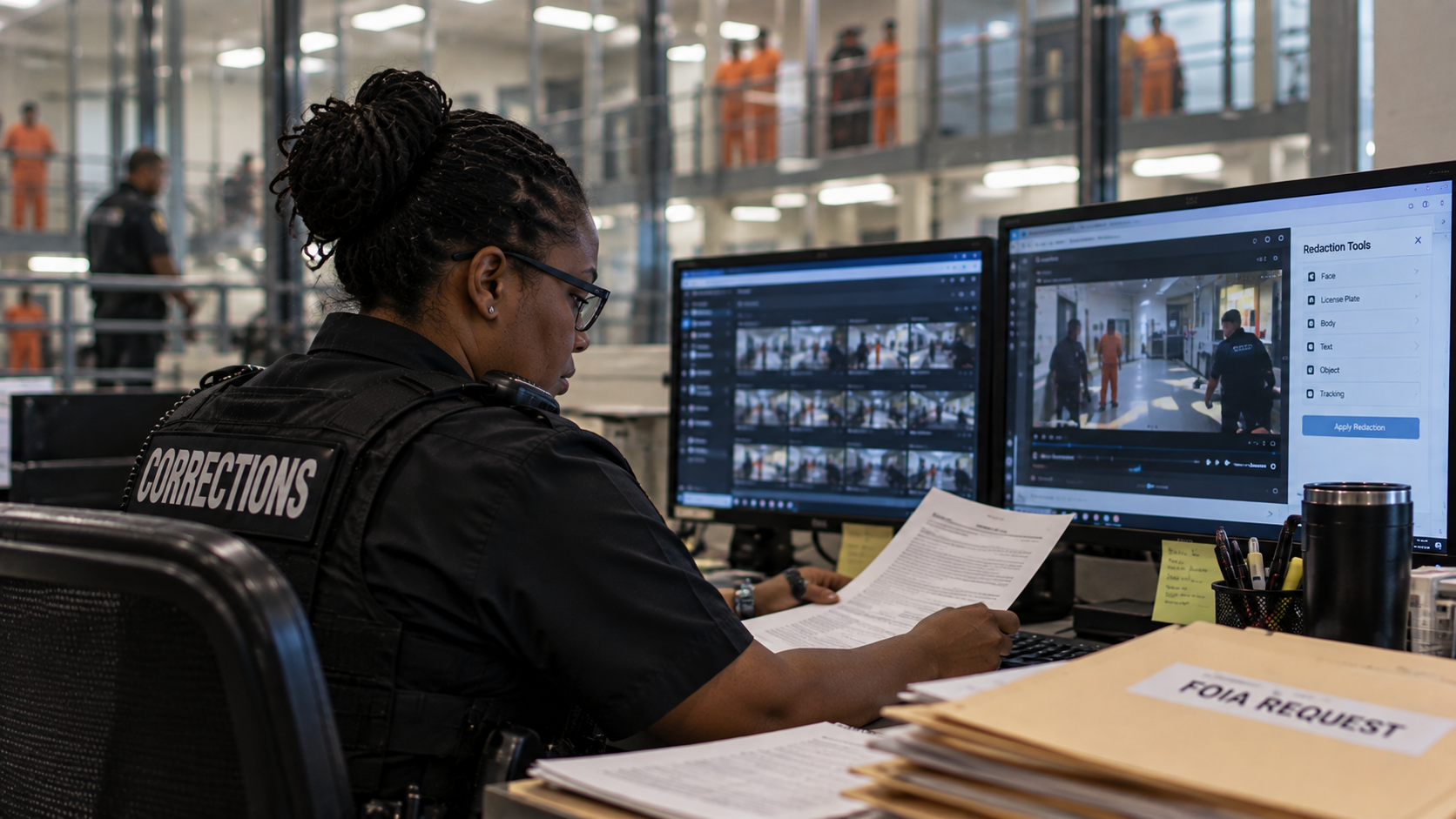
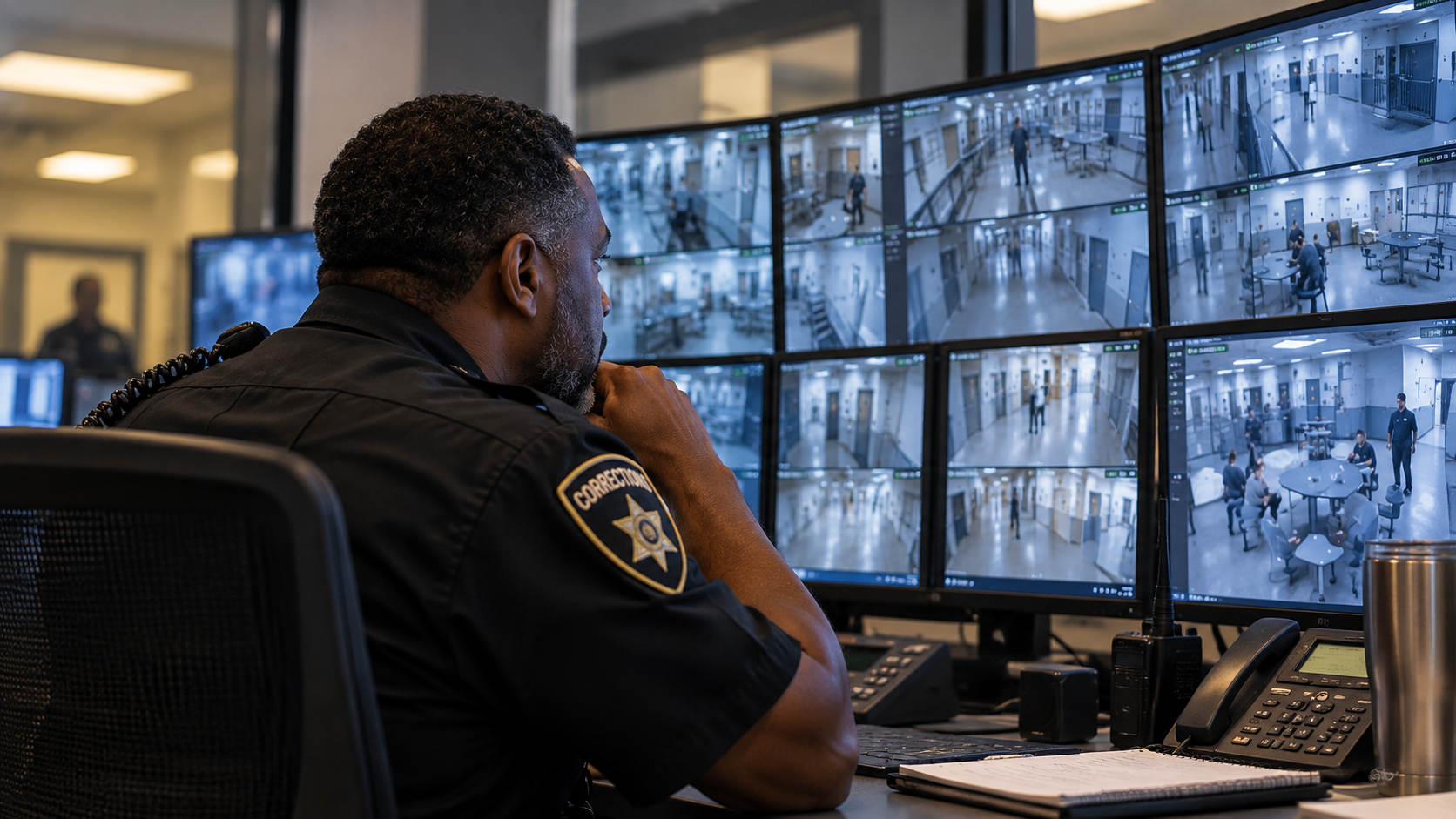
Most corrections control rooms are running one or two people across multiple separate video management systems. Not one system with multiple camera feeds. Multiple separate systems, each requiring its own screen, its own interface, and its own attention.
“A lot of jails have one, if they're lucky two, people watching hundreds of monitors, maybe 10 or 20 monitors that have hundreds of cameras cycling through them. That can't be efficient. I know of jails where they have the monitors on in the background, cycling through 10, 15, 20 of the cameras where it's most likely to have activity. One person is responsible for not only communicating with the rest of the staff but monitoring all of that as well.”
— Sheriff (Ret.) John Boyd, Coreforce Law Enforcement Relations Manager
No person can maintain complete attention across that many feeds simultaneously. It is not a failure of the operator. It is a failure of infrastructure that was not designed for the monitoring task it is being asked to perform.
What this means operationally is situations that develop between camera cycles, in areas the operator was not watching at that moment, or in the visual gap between two camera angles, are not caught. They are responded to after someone radios in. The response may be exact, but the prevention did not happen.
Proactive operations require three things that most facilities currently lack. Unified visibility, where fixed cameras, body cameras, and access control feed into a single interface versus separate systems. AI-assisted detection, using system analysis – flagging behavioral anomalies and environmental patterns preceding incidents and patterns – things a operator could miss. And alert-based response, where the control room operator receives a specific, targeted notification about a specific camera with the relevant context already assembled, and acts on it in time to intervene.
Tewalt describes what that third capability looks like in practice.
“You can do pattern analysis on your cameras and see somebody walking toward a group of people really fast, or a group that's mobbing together in ways that they shouldn't, and your cameras are picking that up and alerting the right person. You can deploy staff. You can apply an intervention. Versus right now: it's happening, and then we're responding, and then we're cleaning up the mess.”
— Josh Tewalt, Former Director, Idaho Department of Corrections
How Do You Get There
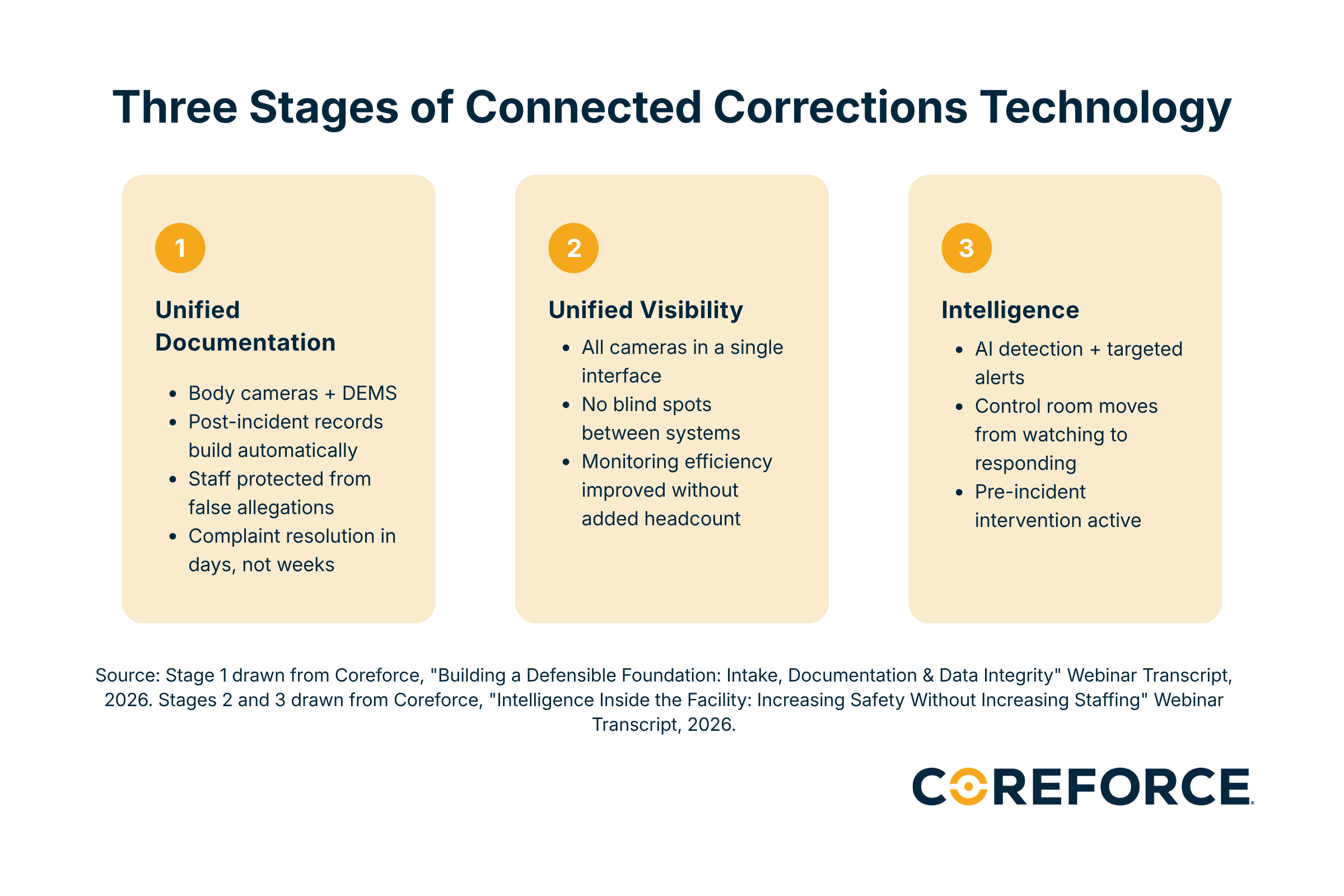
Most facilities do not move from fragmented systems to full real-time intelligence in a single deployment. They move through stages, each stage producing measurable improvements before the next one begins.
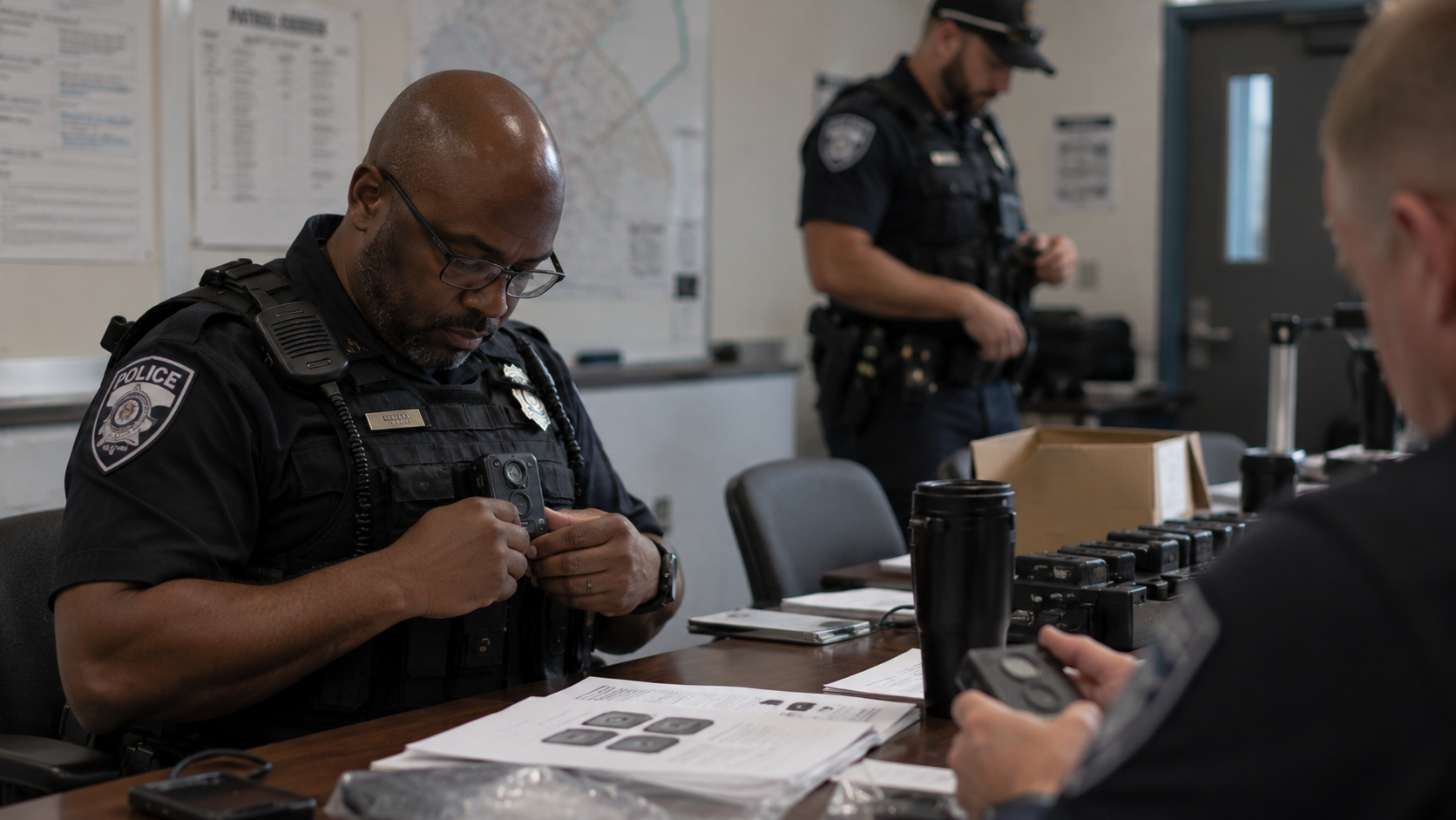
The first stage is unified documentation - body cameras connected to a digital evidence management system where incident records build themselves versus assembled after the fact. This does not yet produce prevention capability, but it removes the post-incident assembly burden, protects officers from false allegations immediately, and begins building the data infrastructure that subsequent stages depend on.
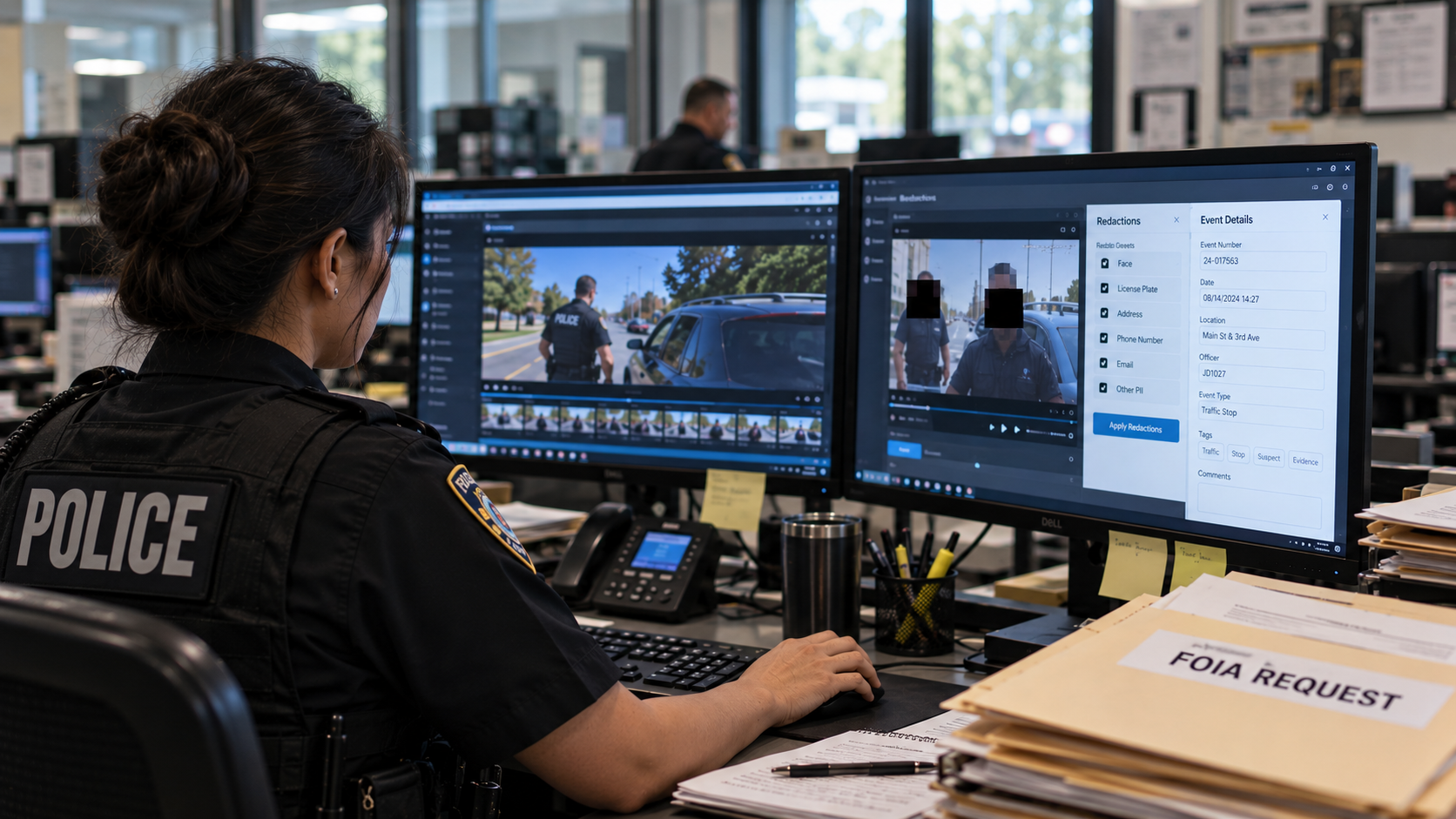
The second stage is unified visibility - connecting body cameras, transport cameras, and all fixed cameras into a single monitoring interface. The control room no longer cycles between three separate systems. Coverage gaps that were invisible become visible. Monitoring efficiency improves without adding headcount.
The third stage is intelligence, adding AI detection and alert capability to the unified camera system. The control room transitions from watching to responding. Targeted alerts replace manual cycling. Pre-incident intervention becomes operationally possible.
Each stage has a measurable outcome. Each one makes the next one more valuable. And each one represents a meaningful reduction in the operational and financial cost of reactive management.
How to Make the Budget Case
When corrections leaders make the case to a governing body for connected technology investment, the conversation usually gets stuck on cost. The more effective argument shifts to what reactive operations are already costing.
A lockdown that lasts three days costs overtime for every officer called in, legal review of any incidents that occurred, and a downstream effect on facility morale and population behavior that persists after normal operations resume. A staff assault costs workers' compensation, potential litigation, and the weeks or months the injured officer is absent. An allegation that drags through a six-month investigation because the record could not be assembled quickly costs supervisor time, legal staff time, and potentially a settlement. That is what the current infrastructure is costing.
The Florida and Oklahoma data gives governing bodies a direct comparison. A 42% decrease in staff assaults. A 70% reduction in excessive force allegations. A 60% drop in PREA complaints. [3][4] These are not aspirational outcomes. They are documented results from real corrections departments.
The question for any governing body is not whether connected corrections technology costs money. It does. The question is how much more is being spent on the consequences of reactive operations? In almost every facility, the answer is often much more.
Sources
[1] Stateline — “State Prisons Turn to Extended Lockdowns Amid Staffing Shortages, Overcrowding” (citing IDOC operational data, FY2019–FY2024; attributes the rise to understaffing and overcrowding, not camera or monitoring infrastructure) https://stateline.org/2024/12/03/prison-lockdowns/
[2] Spectrum Local News, reporting New York DOCCS 2024 staff assault data (2,070 assaults, attributed by DOCCS to staffing decline, mandatory overtime, and facility closures) https://spectrumlocalnews.com/nys/central-ny/politics/2025/02/18/why-new-york-correction-officers-are-striking
[3] Bridge Michigan — “Michigan to Require Most Prison Staff to Wear Body Cameras” (reporting Florida DOC pilot results: 42% staff assault decrease, 51% use-of-force drop, 70% excessive force allegation reduction, 2019) https://bridgemi.com/michigan-government/michigan-require-most-prison-staff-wear-body-cameras/
[4] Oklahoma Watch — “Oklahoma Bets on Body-Worn Cameras to Improve Prison Conditions” (reporting ODOC pilot results: 60% PREA complaint reduction, 2024) https://oklahomawatch.org/2024/10/02/oklahoma-bets-on-body-worn-cameras-to-improve-prison-conditions/
[5] Coreforce, “Building a Defensible Foundation: Intake, Documentation & Data Integrity” Webinar Transcript, 2026 https://www.coreforcetech.com/resources/building-a-defensible-foundation-intake-documentation-data-integrity
[6] Coreforce, “Intelligence Inside the Facility: Increasing Safety Without Increasing Staffing” Webinar Transcript, 2026 https://www.coreforcetech.com/resources/intelligence-inside-the-facility-increasing-safety-without-increasing-staffing
Where Would Your Facility Start?
Talk to Coreforce about what your technology transition path looks like, from unified documentation to unified visibility to intelligence.
Your facility already knows how to respond. See the three stages that take a control room from cycling cameras to acting on early signals.