256px.webp)
It's Not Your Staff. It's Your Systems.
Ask a correctional officer who just resigned, why they are leaving. They will tell you the hours. The mandatory overtime. The stress. The exposure to violence that never really stops affecting you even when you are off the clock.
All of that is true. But there is a layer underneath that almost never gets named in an exit interview. That's because officers often do not have the language for it. And identifying it would require an administrator to acknowledge something uncomfortable - the systems used every day are actively making the job harder than it has to be.
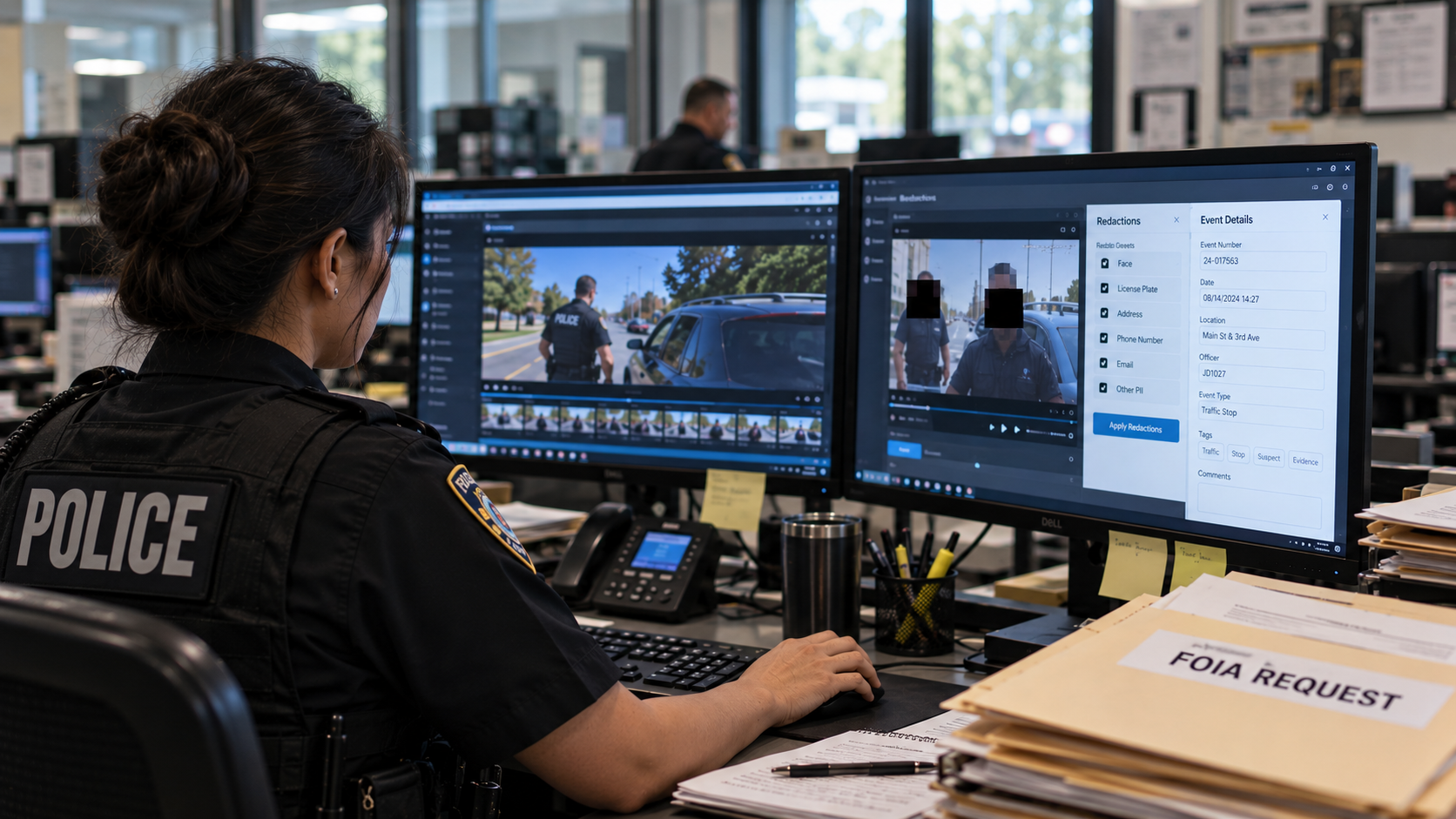
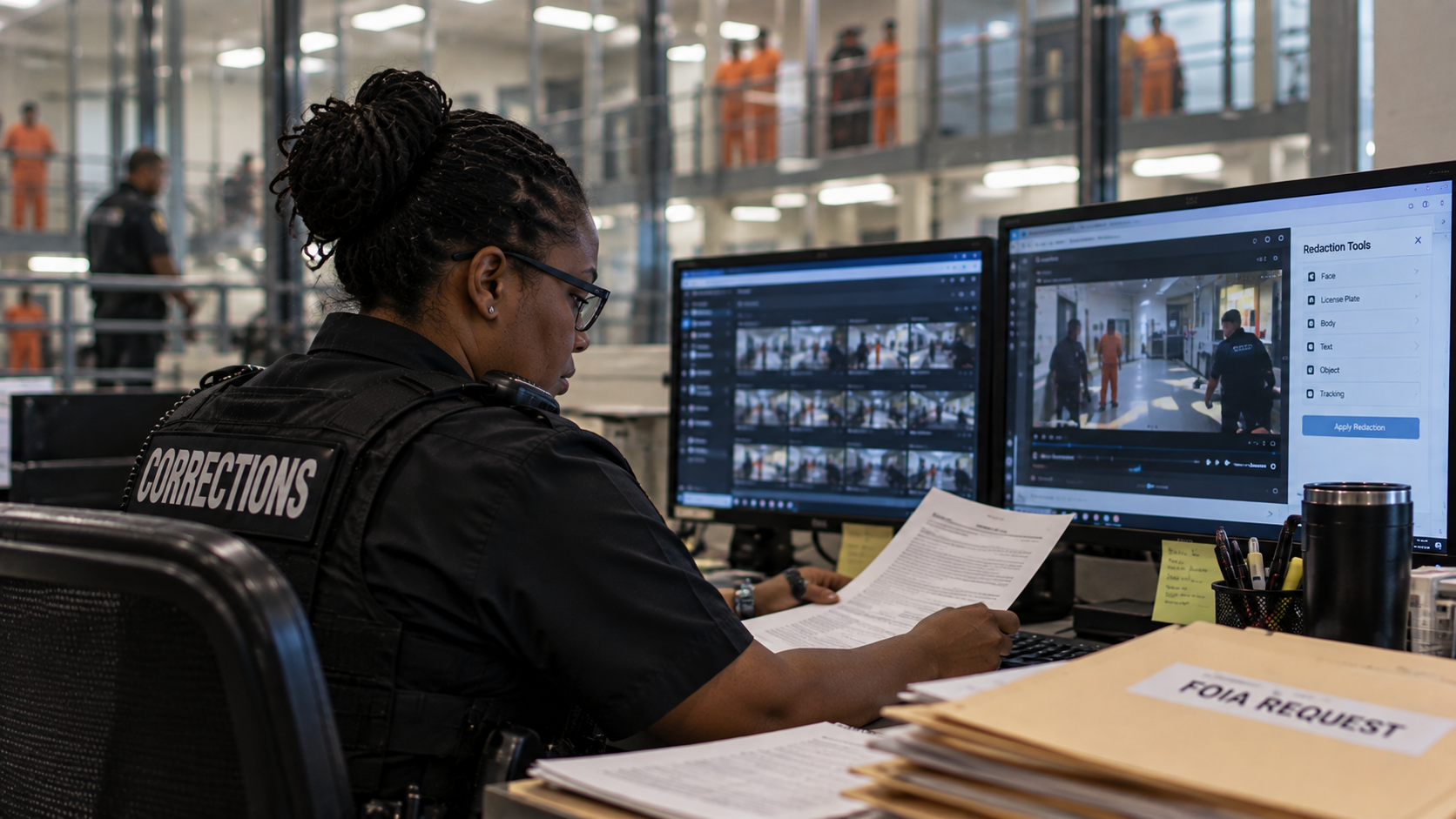
They are exhausted not just by the work, but by the friction. Running between floors to pull records from systems that do not talk to each other. Completing the same data entry twice because the JMS and the medical system require separate inputs for the same information. Writing incident reports from memory because the footage is in a different system they cannot quickly access. Spending the first hour of a shift on administrative tasks that should take fifteen minutes.
That is not the job.That is the job made difficult by infrastructure that was never designed to support it.
The part of the staffing crisis caused by system disparity is larger than most administrators realize.
The Hidden Cost of Every Short-Staffed Shift
Josh Tewalt experienced this directly in Idaho when the Department of Corrections transitioned documentation systems. The goal was efficiency. What happened in the transition was the opposite.
“Things that would take our staff at intake 5 clicks to do now took them 10 clicks. And that's real time. That's taking them away from other important duties that they should be doing. That's real overtime we are creating.”
— Josh Tewalt, Former Director, Idaho Department of Corrections
Five extra clicks per task may sound trivial. However, when experienced across a full intake shift processing dozens of admissions, those clicks turn into hours. In a facility already running at 20 or 30 percent vacancy, those hours are not recoverable. They come directly from supervision time. From welfare check rounds. From the visible officer presence that deters incidents before they require response.
This system fragmentation resulting in documentation burden is not just an inconvenience. In an understaffed facility, it is a safety gap.
Boyd describes the most extreme version of this pattern from an agency he visited. The operational reality is information a staff member needs to do their job often resides in separate places. Somewhere in the facility that requires traveling between floors, logging into multiple systems, and waiting for colleagues in other departments to provide access. The facility is running at a fraction of its actual human capacity because its technology is working against its people.
What Technology Should Actually Remove
The distinction that determines whether a technology investment helps or compounds the problem is simple. The questions become, does the technology deployed add tasks? Or is the technology designed to remove the problem.
When the JMS, the medical records system, the property log, and the incident documentation platform are connected, an intake officer completes the intake on one screen. A prior medical flag surfaces automatically. Property is logged once and linked to the individual's record. The information that previously required potential engagement with three separate locations or systems is in a single view. That officer is available to do the next thing the shift requires.
When body cameras are integrated with the evidence management system, an officer completing an incident report reviews the footage before writing rather than reconstructing from memory. The report is more accurate, takes less time, and is already linked to the incident record. There is no separate upload. No separate file management. The system has it readily available automatically.
The result of removing this friction is not just efficiency but also officer experience. When a shift is operationally manageable, when the tools work for you rather than against you, and when a false allegation is resolved in a week versus six weeks, the calculus of whether this job is worth staying in changes.
“None of this technology is ever going to replace a single human being or the importance that they bring to the work of corrections and behavior change. But man, we owe it to them to bring technology in to help them be better positioned and more impactful at the work that they do.”
— Josh Tewalt, Former Director, Idaho Department of Corrections
The Retention Argument Nobody Realizes
The corrections staffing crisis is discussed almost entirely as a recruitment problem. Yet, the data suggests it lends to a retention problem, driven as much by working conditions as by compensation.
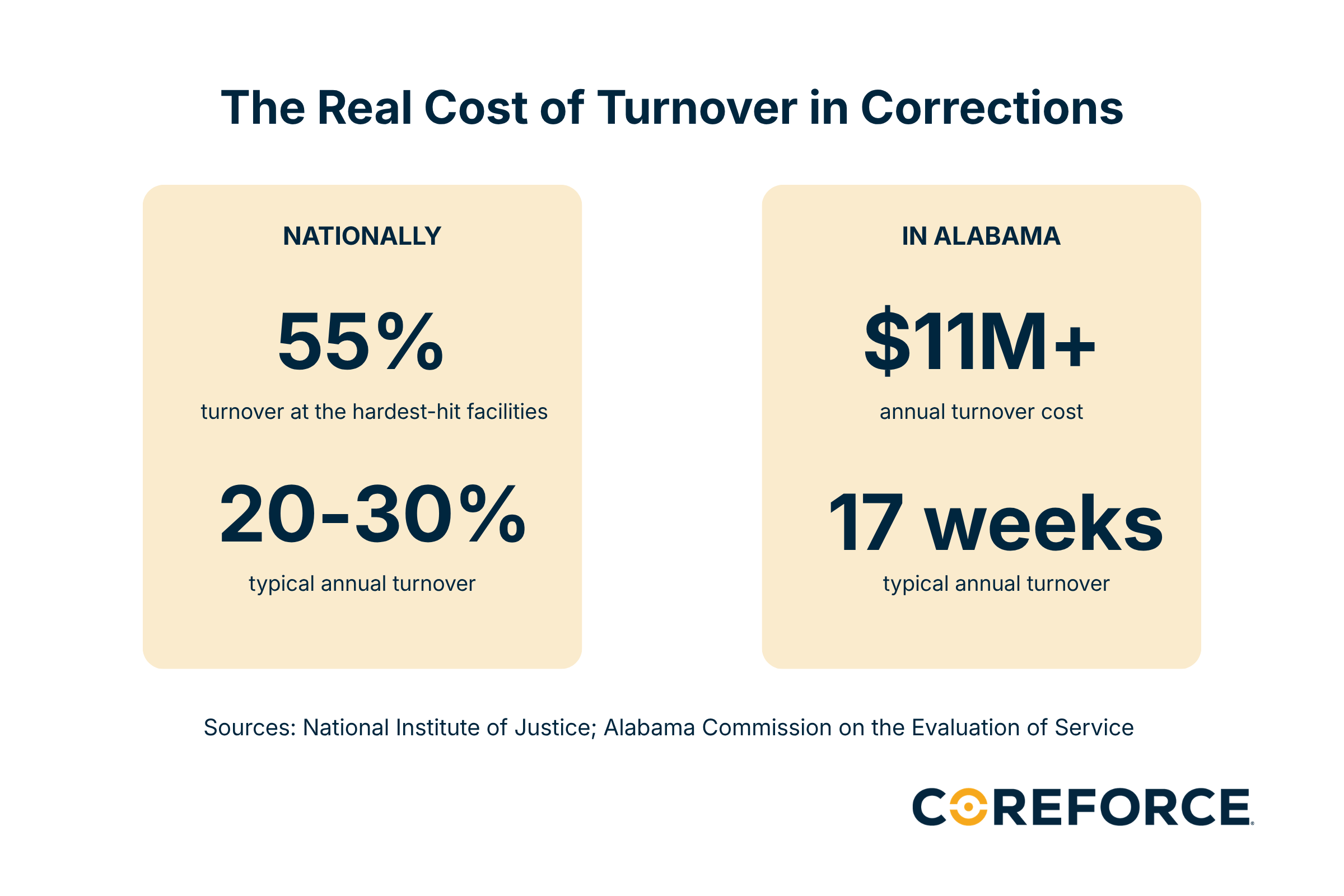
• Turnover in state prisons has been reported as high as 55% in some facilities, per the National Institute of Justice, with roughly half of agencies nationally reporting 20 to 30 percent annual turnover. [1]
• Alabama's corrections system spends more than $11 million annually on turnover costs, with nearly 17 weeks required on average to hire, train, and replace each departing officer, according to the state's own Commission on the Evaluation of Services. [2]
Every officer who leaves is 17 weeks of coverage gap, recruitment cost, and institutional knowledge that walks out the door.
The facilities making the most progress on retention are not doing it by raising wages alone. They are doing it by removing the friction that makes an already hard job feel unsustainable. Officers who can complete documentation efficiently, who know the system will protect them when a false allegation is filed, and who are not spending their shifts fighting technology that was not designed for them, stay longer.
Technology that works for staff is not a morale initiative. It is a staffing strategy.
Where to Start
You already know where the highest-friction points are. Ask your intake supervisor how long a busy intake shift runs before the administrative load eases. Ask your incident investigators how long it takes to pull a complete post-incident record. Ask your control room supervisor how many separate systems they are managing simultaneously and when they last felt confident they had complete visibility.
The answers to those three questions will tell you which friction points are costing the most staff hours and creating the most coverage gaps. Not every one of them requires a full infrastructure overhaul. Some can be addressed by connecting systems that already exist within your facility. The goal is not perfect connectivity immediately. It is meaningful friction reduction that your staff feels quickly and noticeably.
Sources
[1] National Institute of Justice, “Workforce Issues in Corrections” (turnover rates as high as 55%); Prison Policy Initiative analysis of a nationwide corrections agency survey (20–30% annual turnover for roughly half of agencies) https://nij.ojp.gov/topics/articles/workforce-issues-corrections
[2] Alabama Commission on the Evaluation of Services — “A Study of the Correctional Officer Recruitment & Retention Efforts” (more than $11 million in annual turnover cost; nearly 17-week average hire-to-fill timeline) https://evidence.alabama.gov/publications/correctional-officer-recruitment-retention-efforts/
[3] Coreforce, “Building a Defensible Foundation: Intake, Documentation & Data Integrity” Webinar Transcript, 2026 https://www.coreforcetech.com/resources/building-a-defensible-foundation-intake-documentation-data-integrity
[4] Coreforce, “Intelligence Inside the Facility: Increasing Safety Without Increasing Staffing” Webinar Transcript, 2026 https://www.coreforcetech.com/resources/intelligence-inside-the-facility-increasing-safety-without-increasing-staffing
Where Are Your Systems Costing Staff Time?
Connect with Coreforce to map your current workflows, identify where disconnected systems are creating unnecessary work, and determine where connected technology can make the greatest impact.
Disconnected systems create more than extra work. See how technology friction adds to staffing pressure and what corrections leaders can do to reduce