256px.webp)
When Intake Becomes Evidence
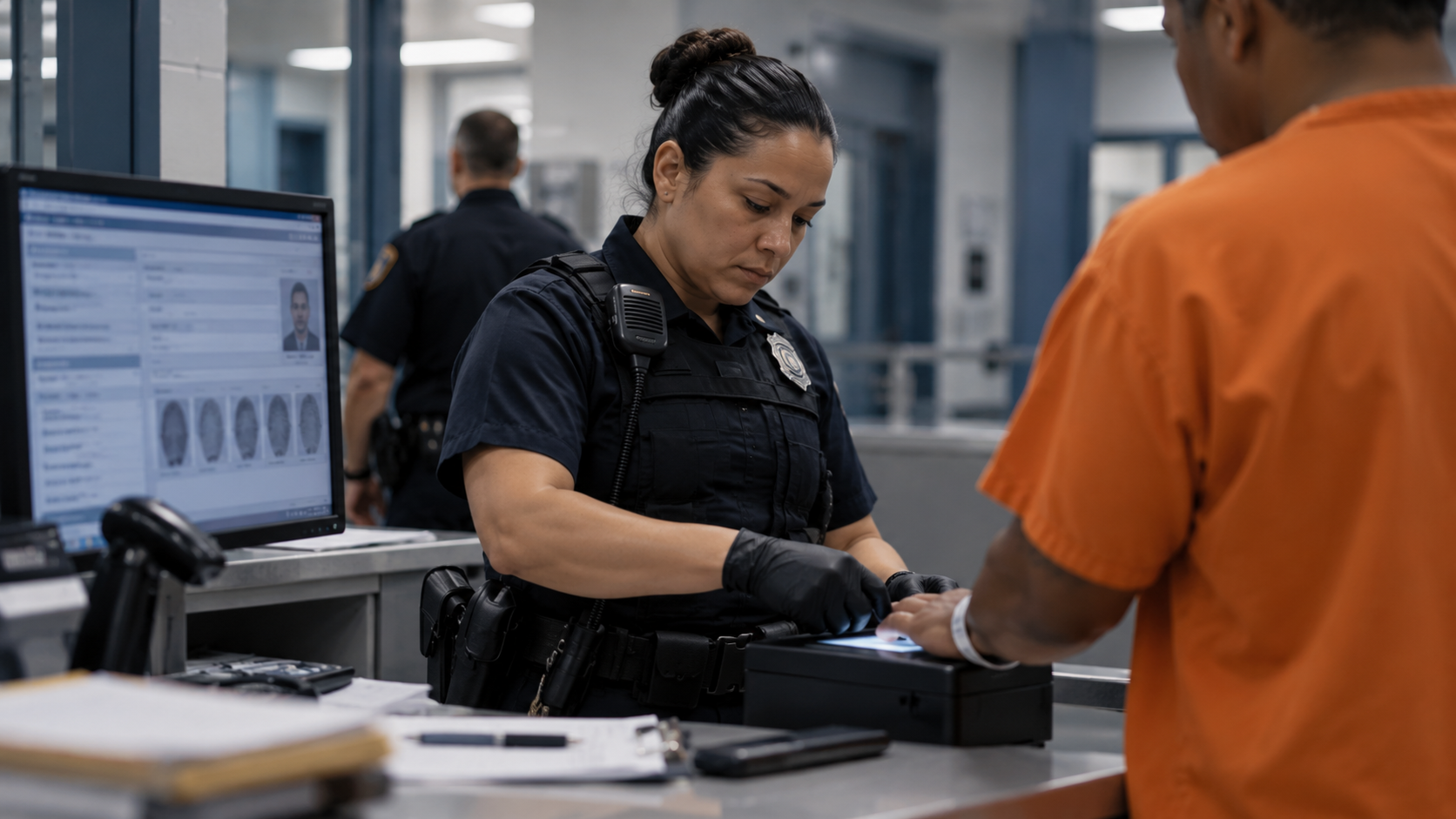
Legal exposure that corrections leaders almost never see coming may not seem like “exposure” at the time. It happens at intake. It looks like a normal shift. The officer was doing their job. The intake was processed. The facility moved on.
Three months later, an attorney files a claim. Six months later, your facility is trying to reconstruct what happened at intake from a fixed camera with a bad angle and no audio, a report written hours after the fact, and an officer who cannot specifically remember a single intake out of the hundreds they have processed since.
The record that would have defended your facility was not created. Not because the officer did anything wrong, but because the intake process was not designed to defend it.
Where Liability Begins
Intake can be the most chaotic moment in the process. Every person who walks through that door is an unknown, arriving in a state of heightened stress, sometimes in crisis, sometimes under the influence, sometimes in medical distress that has not yet been identified. The intake officer has minutes to screen for medical conditions, mental health history, behavioral risk, property, identity, housing classification, and legal status. Simultaneously.
The most dangerous part of intake is not the interaction itself. It's the gap between the interaction and the claim.
“In the processing area, that's where you're most likely to see liability. Or liability will result weeks or months later, as a result of that intake. The intake officer is a jack of all trades. They're not a mental health professional. They're not a medical professional. But what happens at intake gives a glimpse to those professionals as to the state of mind and physical appearance of the individual at the moment of arrival. And if it's not captured correctly, that glimpse disappears.”
— Sheriff (Ret.) John Boyd, Coreforce Law Enforcement Relations Liaison
In a state prison system, the stakes are different but equally consequential. Josh Tewalt, former Director of the Idaho Department of Corrections, oversaw 9 prisons, 4 reentry centers, and 25,000 people under supervision. In his system, intake documentation was not just a legal formality. It was the foundation of every decision made about a person during their entire time in custody.
“The documentation we create at intake, we're going to rely on for a series of decisions that are going to follow that person for a period of time. Medical examinations, mental health screenings, risk assessments and needs. Those are foundational to placement, to programming, to everything that follows. When that foundation is incomplete or inaccurate, everything built on it is compromised.”
— Josh Tewalt, Former Director, Idaho Department of Corrections
Small Misses Become Big Problems
Intake failures that generate the most legal exposure are rarely dramatic. They are small, plausible-looking gaps. A question not asked. A system not checked. A field left blank because the officer was managing four other things at the same time.
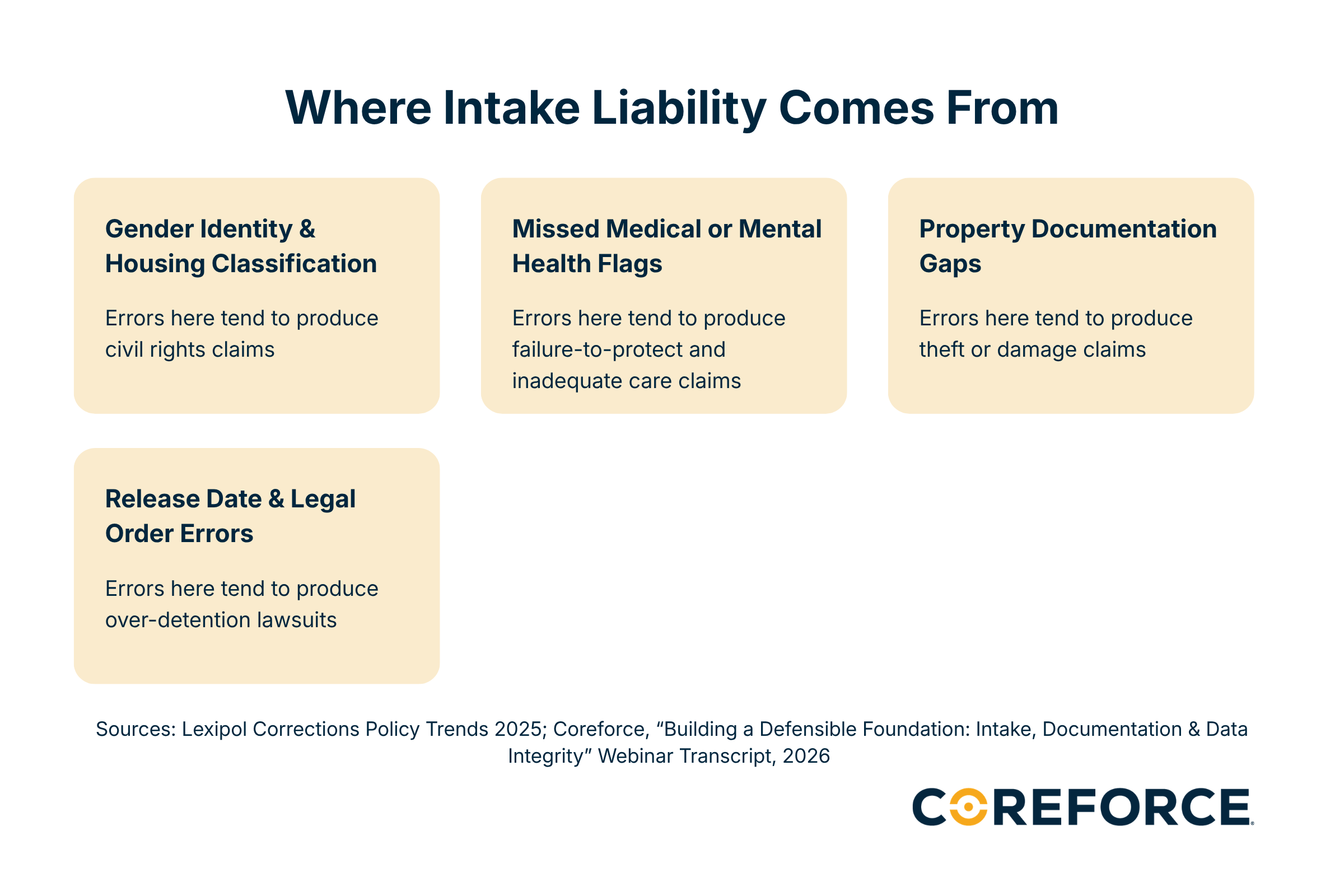
“An inmate came in and during the intake process, rather than asking the inmate what their gender was or how they identified, the intake officer assumed because of their appearance. Several months later, that inmate said they identified as a gender other than what it was perceived they came in as. That was an important miss. And if there was consistency, a standardization process, sound policies in place, that miss doesn't happen.”
— Sheriff (Ret.) John Boyd, Coreforce Law Enforcement Relations Liaison
This single assumption, made during a chaotic intake on a short-staffed shift, became a legal liability months later. The documentation gap was not the officer's fault. It was a system failure. There was no standardized process requiring the question to be asked. No checkpoint. No mechanism to catch the miss before it became a claim.
Over-detention is another category where intake documentation creates downstream liability rarely anticipated. When release dates are calculated incorrectly, when charges are entered with errors, when legal orders are not updated in the system, people are held beyond their legal release date. Resulting civil rights claims can include compensatory and punitive damages, and several class-action lawsuits have resulted in substantial payouts.
Every year, 7.9 million people are admitted to jails in the United States. That is 7.9 million opportunities for a missed question, a system error, or an incomplete record to become a claim that arrives months after the intake officer has moved on to the next shift.
The Value of a Complete Record
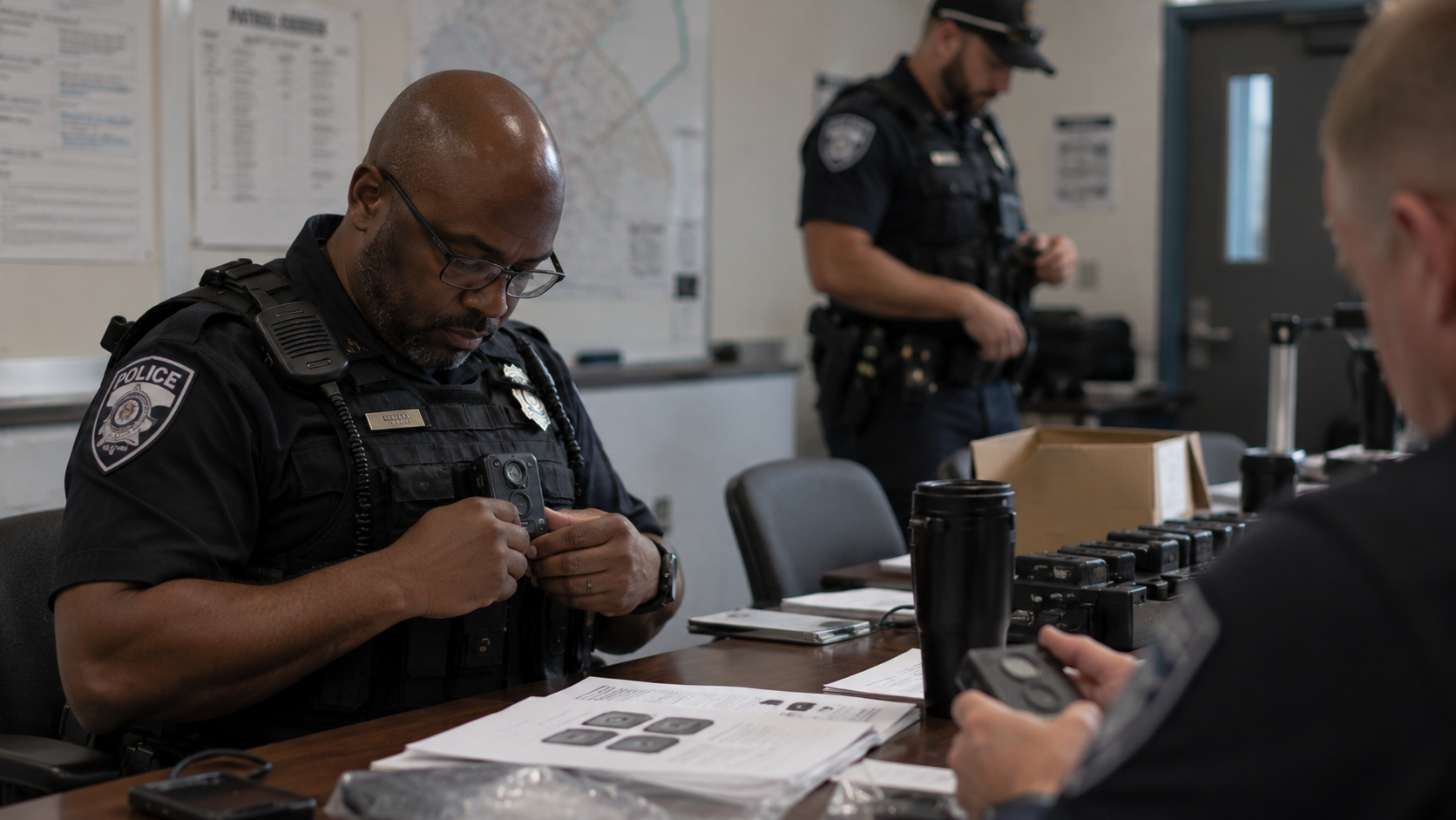
When intake documentation is standardized and captured from the officer's perspective in real time, not reconstructed after the fact, it offers complete details that fixed cameras and paper logs alone cannot.
It creates a concurrent record of the individual's demeanor, physical condition, stated information, and the officer's direct observations at the moment of arrival. Not what the officer remembers six months later. What actually happened. That unbiased account of the interaction is the one that holds up when an attorney claims the interaction was different from how staff describes it.
Tewalt saw this play out in his system when staff faced allegations following interactions with people in mental health crisis at intake.
“Having body worn cameras and the ability to create a near perfect record of someone's interaction with another person has been so important. Not just in finding allegations unfounded, but in exonerating staff and giving them that peace of mind that those allegations were untrue. The truth is their best defense when they have evidence to support it.”
— Josh Tewalt, Former Director, Idaho Department of Corrections
That peace of mind is not a soft benefit. It is a retention benefit. Officers who know they are protected by an accurate record of their interactions are less likely to leave a profession where false allegations are a routine occupational hazard.
Technology Cannot Fix What Policy Has Not Defined
Before a facility can benefit from technology that improves intake documentation, it needs a standardized intake process. Many facilities have policies that describe what should happen at intake but no mechanism for ensuring it happens the same way, by every officer, on every shift, regardless of how short-staffed the day is.
When asked what he would do differently while running a jail, John Boyd 's response was direct, "Standardize the intake process first. Train to it consistently. Build the policy before you buy the technology, because the technology only captures what the process requires."
Coreforce partners with Lexipol, the leading corrections policy provider, to help facilities build that foundation before implementing technology. Policy first means every documentation gap that creates liability is closed by design, not patched after the fact.
Sources
[1] Lexipol / Corrections1 — “5 Corrections Policy Trends for 2025” (over-detention causes, civil rights liability) https://www.lexipol.com/resources/blog/5-corrections-policy-trends-for-2025/
[2] Bureau of Justice Statistics — Jails Report Series: 2024 Preliminary Data Release (7.9 million jail admissions, July 2023–June 2024) https://bjs.ojp.gov/library/publications/jails-report-series-2024-preliminary-data-release
[3] Coreforce, “Building a Defensible Foundation: Intake, Documentation & Data Integrity” Webinar Transcript, 2026 https://www.coreforcetech.com/resources/building-a-defensible-foundation-intake-documentation-data-integrity
Hear How Corrections Leaders Handle Intake Liability
Sheriff (Ret.) John Boyd and former Idaho DOC Director Josh Tewalt explain what intake liability looks like and what it costs when the record doesn't hold up.
Intake is where liability starts and where a complete record can defend your facility. Learn why standardizing the process comes before the technology.