256px.webp)
Three Things Agency Chiefs Actually Worry About When Buying Body Cameras (And What to Do About Each One)
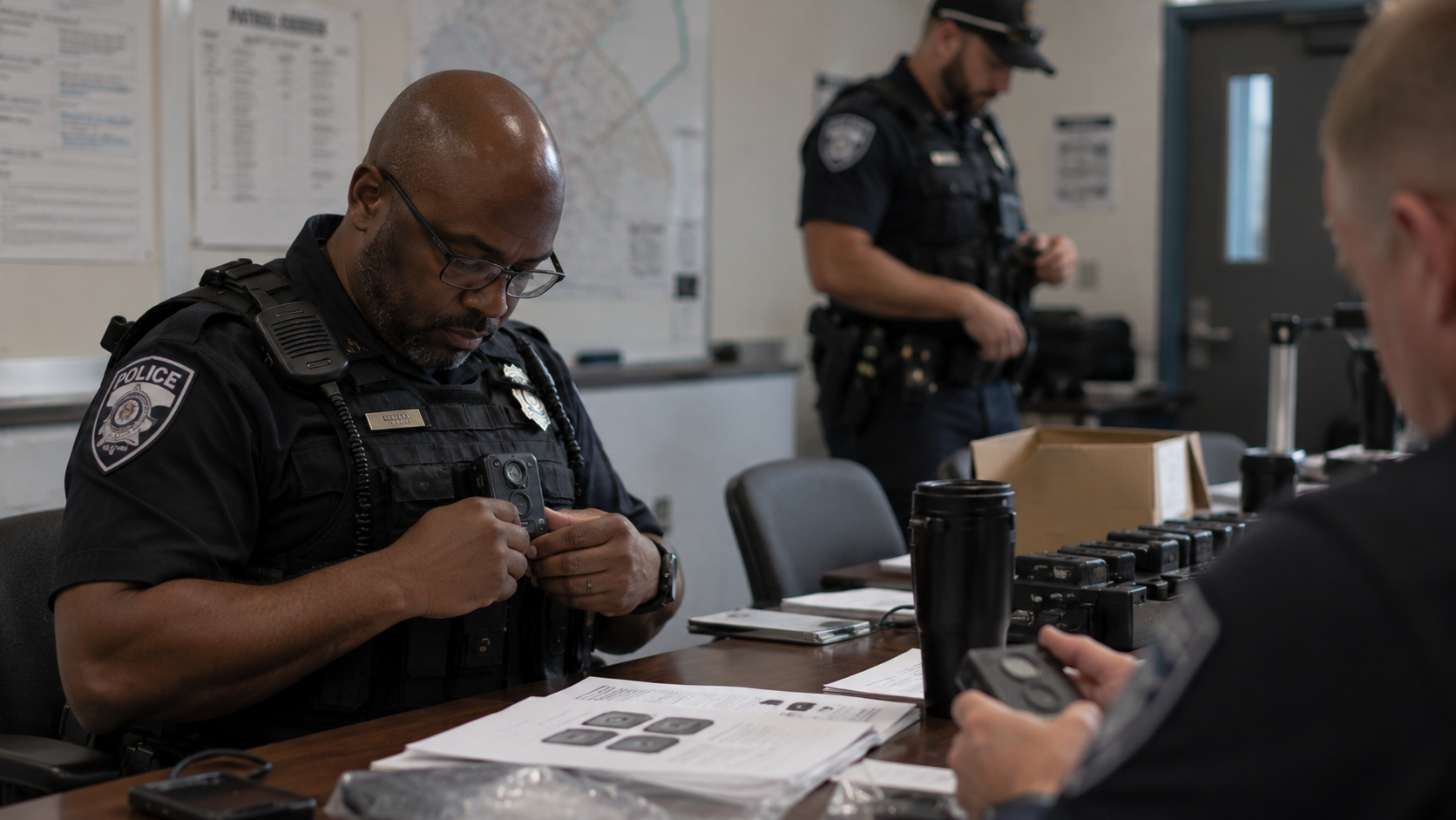
There are three concerns that come up in nearly every body camera evaluation at a small agency. They are not the concerns that show up in vendor brochures. They are the ones chiefs carry into budget meetings knowing they will surface as objections and not always having a ready answer when they do.
They are worth naming directly. Each one is real. Each one is solvable. And the chiefs who have already been through this process have worked out exactly how to handle them.
Concern 1: What If We Choose the Wrong System and Can't Get Out?
This is the fear that stops more programs before they start -- more so than budget objections. Once your evidence library lives in one platform, migrating is expensive, slow, and sometimes deliberately complicated by the vendor you are trying to leave. A five-year contract with the wrong provider is not just a bad purchase. It is an operational constraint that every officer, every supervisor, and every records clerk will feel every single shift for the life of that contract.
Sheriff (Ret.) John Boyd knows what this looks like from the inside.
“Quite frankly, the company that we had originally contracted with admitted that we sold you expectations that we simply can't fulfill. A contract goes both ways. If your vendor is not providing what they're contracting to provide, they're in violation of the contract as well.”
— Sheriff (Ret.) John Boyd, Coreforce Law Enforcement Liaison
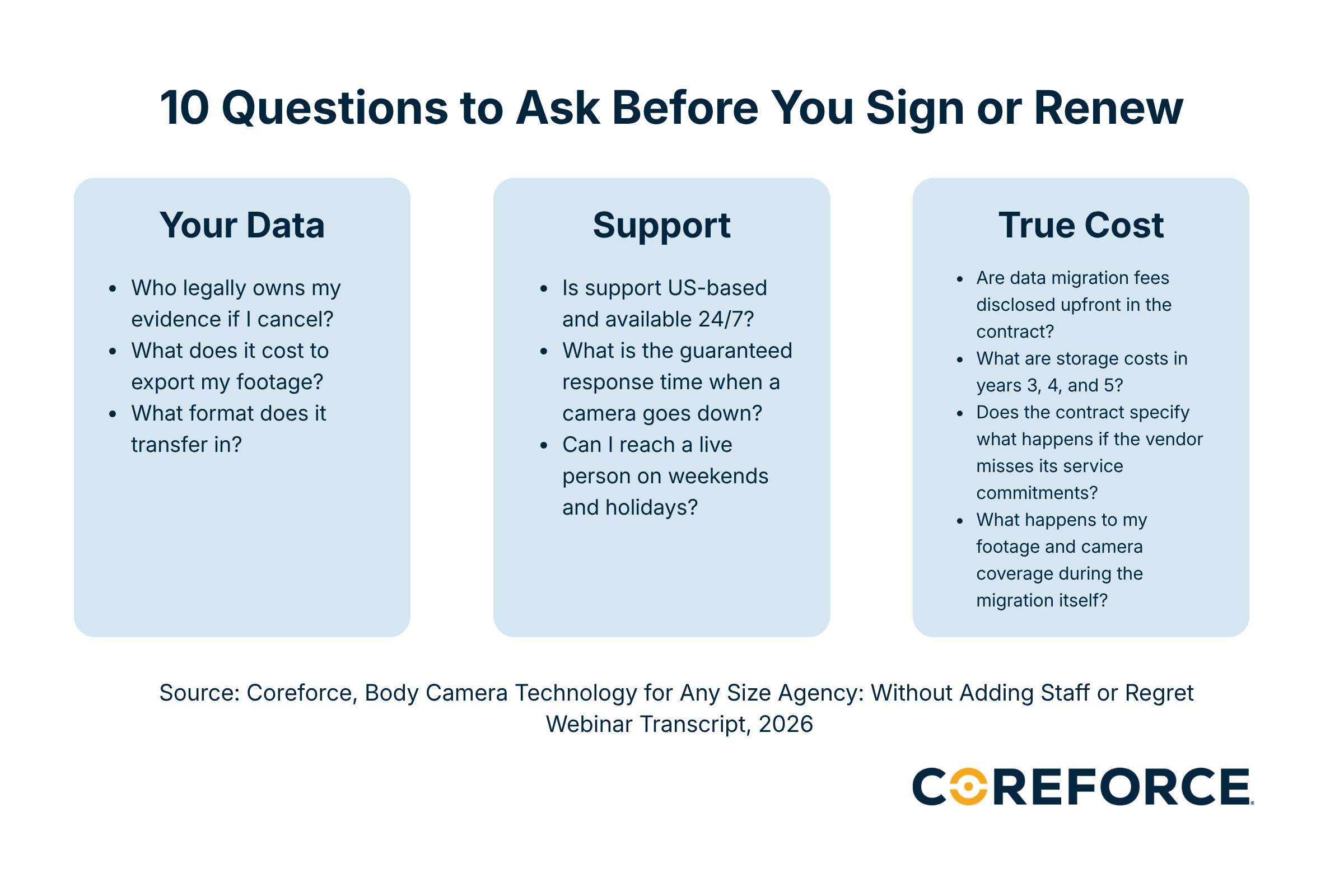
Boyd's rule: read every contract as if the vendor has already failed to deliver, because some do. Before you sign, ask the questions vendors are hoping you will not think to ask.
- Who legally owns your evidence data if the contract ends? If the answer is anything other than your agency, do not sign.
- What does it cost to export your footage if you switch vendors? Some vendors charge extraction fees that make switching prohibitively expensive. That is by design. Get the number in writing before you commit.
- Is support US-based, live, and available 24/7? During a demo,response times are fast.
- Examine the agreement for turnaround time guarantees relating to client support; not just during the honeymoon phase, but for the duration of the contract.
- Does the contract hold the vendor to what they demonstrated? If the demo showed 30-second upload times and same-day camera replacement, those commitments need to appear in the contract language. A promise in a slide deck is not a guarantee.
Chief Mark Swistek's solution to this concern is practical and repeatable: run a 90-day field evaluation before any technology decision.
“I would encourage everyone to at least do a testing and evaluation stage. Get a demo camera in, try it for 90 days. Make sure that you're happy with the product and that your staff get employee feedback as well. They're the ones on the front line that are going to have to utilize this equipment. Getting that buy-in from your staff before you make that final decision is very important.”
— Chief Mark Swistek, Long Beach (IN) Police Department
Concern 2: How Do I Get Budget Approval When the Number Feels Too Big?
Stop defending the price.
Make your governing body answer a different question.
The chiefs who win body camera budget conversations do one thing differently from the ones who lose them. They never lead with the contract price. They lead with the cost of not having cameras, which is a number their council has never been asked to look at directly. A town council member staring at a multi-year contract line item is doing one calculation. A town council member who understands that a single use-of-force complaint without video can trigger their agency's $50,000 insurance deductible is doing a completely different one.
Chief Swistek has won this conversation twice, at two different agencies. Here is the exact framing that worked both times.
“The two most important key points were the protection for our officers from false allegations, and then most importantly to the town, the risk and the liability exposure. A lot of times your insurer is going to say, go ahead and we're going to settle this first $50,000. On small communities like us, that can really hurt a budget.”
— Chief Mark Swistek, Long Beach (IN) Police Department
If the price is still the sticking point after that conversation, here is the thing most chiefs do not know: federal funding built specifically for agencies your size already exists, and much of it goes unclaimed each cycle simply because agencies do not know to apply.
- For FY2026, Congress appropriated $964 million in total Byrne JAG funding, the highest level in the program's history. There is no local match requirement, and body-worn cameras are an eligible use. [1]
- The DOJ's Bureau of Justice Assistance micro-grant program, designed specifically for small, rural, and tribal agencies, has awarded over $17.56 million for body-worn camera programs since 2021, including a subsequent round that funded 170 agencies across 46 states in a single cycle. [2]
- Coreforce can help you identify which of these programs your agency is eligible for. Lexipol's grant writing team offers full application-writing services for agencies that want that support, available for a fee.
Concern 3: We'll End Up With an Evidence Workload We Can't Keep Up With
This concern is legitimate and it is the one most likely to create real operational pain if it is not handled before go-live. The agencies that get into trouble with evidence workload almost always share one thing in common: they deployed cameras before they had a process.
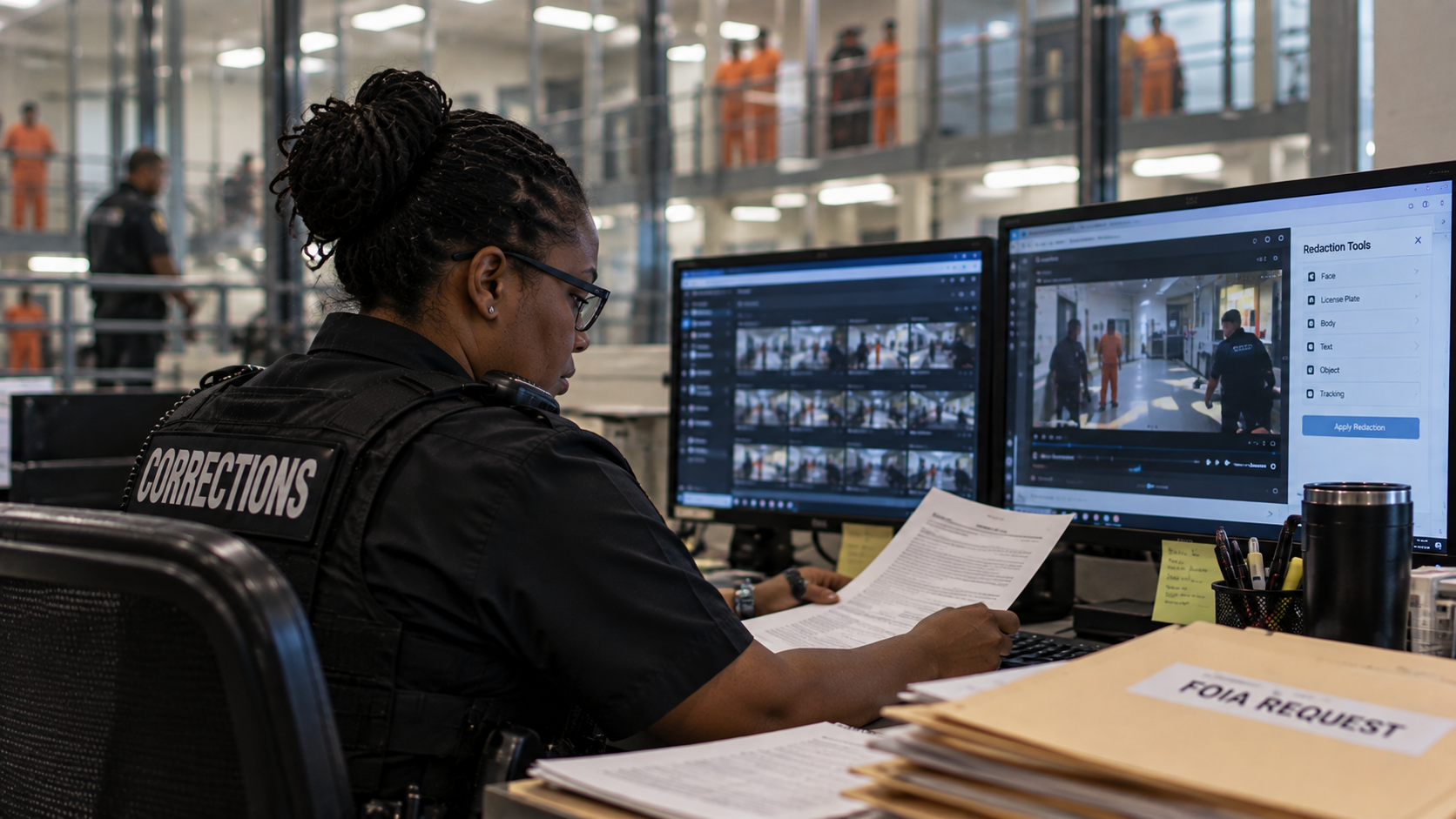
Chief Lesley Wiete runs a 45-officer department at Purdue University covering 55,000 people on campus. One month after going live on cameras, a high-profile incident brought national attention and a surge of FOIA requests.
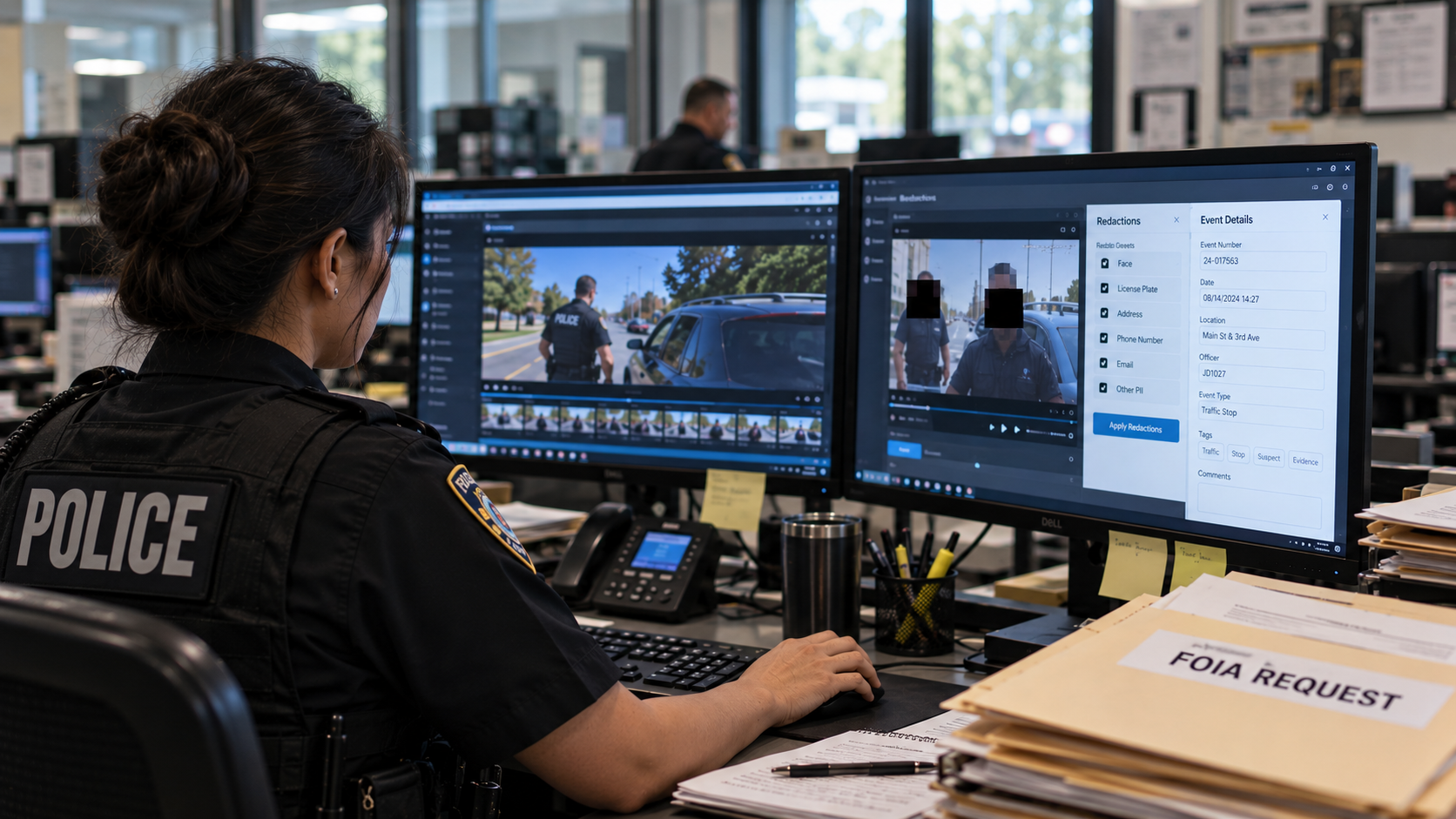
“We didn't probably have the best process in place or weren't exactly prepared a month or two months out to handle the FOIA requests, the redaction, just the time, the hours spent dealing with that process. It was very time consuming. I do recommend trying to think about it ahead of time, just because you never know when something is going to happen.”
— Chief Lesley Wiete, Purdue University Police Department
Here is what a well-designed system removes from your officers' daily workload. For dispatched calls, CAD activation means the camera turns on automatically. Your officer does not have to remember, and the first 30 seconds before activation are already captured. At the end of their shift, the officer docks the camera and walks out. The footage uploads automatically, tagged and linked to the CAD incident record, with classification fields pre-populated. No workstation time. No file management. No manual logging.
The workload that remains, confirming classification, reviewing footage before writing reports, and handling FOIA requests, is real but it is the irreducible minimum of running an accountable program. The chief who assigns an owner, trains a backup, and builds a written response process before cameras go live will find it manageable. The chief who discovers it after the cameras are on the street will find it a recurring crisis.
Sources
[1] Congressional Research Service — “The Edward Byrne Memorial Justice Assistance Grant (JAG) Program”, FY2026 appropriations data https://www.congress.gov/crs-product/IF10691
[2] SRT BWC (Small, Rural, and Tribal Body-Worn Camera Program) — ongoing DOJ/BJA program page; reports $17.56 million awarded 2021–2023 plus a subsequent $6 million round to 170 agencies across 46 states https://www.srtbwc.com/
[3] Coreforce, Body Camera Technology for Any Size Agency: Without Adding Staff or Regret Webinar Transcript — Sheriff (Ret.) John Boyd and Chief Mark Swistek, 2026: https://www.coreforcetech.com/resources/body-camera-technology-for-any-size-agency-without-adding-staff-or-regret
Still Weighing Body Cameras for Your Agency?
Let's work through your specific situation, from contract terms to funding to rollout. Schedule a conversation with a Coreforce rep who works with agencies like yours every day.
Wrong body camera vendor, tight budget, too much footage. Here's how chiefs who've already been through it handle each one.